Some senior dog problems hit the whole household at once. Your dog starts slipping on the floor. Getting up for water takes longer. Nighttime pacing gets worse. Then the accidents start, or the 2 a.m. wakeups, or both.
That combination is exhausting. It is also common enough that owners should not have to piece together a plan from random comments and product lists.
This is a home-setup guide for problems that have already been flagged for veterinary attention, not a symptom tracker or diagnosis tool. This guide gives you a calmer starting point: make the floor safer, make the night easier to manage, and know when the problem needs a vet instead of another rug or gadget.
Start with the vet-first line
Call your vet if your dog suddenly cannot stand, cries when moving, falls repeatedly, seems confused at night, has new accidents, or has a major change in appetite, thirst, urination, or behavior. The American Veterinary Medical Association advises veterinary assessment for changes in senior-pet behavior or activity rather than assuming they are caused only by age.
Home changes can help, but they do not replace a pain check, dementia conversation, arthritis plan, incontinence review, or medication discussion. Sudden mobility loss is not something to troubleshoot with internet advice alone.
Why mobility problems and sleep problems show up together
A senior dog who feels weak or unsure on slick floors may move less during the day. At night, discomfort, confusion, urinary needs, or anxiety may contribute to pacing. Cornell lists nighttime wandering, altered sleep, house-soiling, restlessness, pacing, and anxiety among possible signs of canine cognitive dysfunction, while noting that other medical causes must be ruled out.
The owner ends up managing two problems at once:
- the dog is physically harder to help,
- and the owner is getting less sleep every night.
That is where patience starts to crack. Many owners feel guilty about snapping or feeling resentful. A better setup will not solve every medical issue, but it can remove some of the daily friction that makes everyone feel worse.
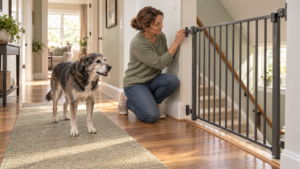
Make a safe path through the house
For many older dogs, hardwood and tile stop being neutral surfaces. They become hazards.
Start with the places your dog uses most:
- bed to water bowl,
- bed to door,
- hallway turns,
- food and water area,
- favorite resting spot,
- route to the yard or potty area.
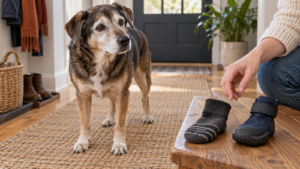
Add traction where the dog actually walks. Use rubber-backed runners or rugs that do not bunch up. If rugs slide, use rug tape or grippers. Watch the edges. A rug that curls up can become a trip hazard.
Do not try to solve the whole house on day one. Build one safe route first.
Walk the whole route before changing the room
Use our senior dog home-safety route audit to trace the trip from bed to water, the potty door, family areas, and the car. The guide includes a free five-page printable for recording the first three changes.
Fix the food and water problem
A dog who slides while eating or drinking may end up splayed out or stuck against a wall. That is scary to watch, and it can make the dog avoid food or water.
Try these basic adjustments:
- place the bowl on a non-slip mat,
- move bowls away from corners or tight wall spaces,
- keep the dog’s feet on a rug or runner while eating,
- ask your vet or physical therapist whether a support harness or feeding-height change makes sense.
If your dog is collapsing during meals, bring that to the vet. The setup matters, but the weakness matters too.
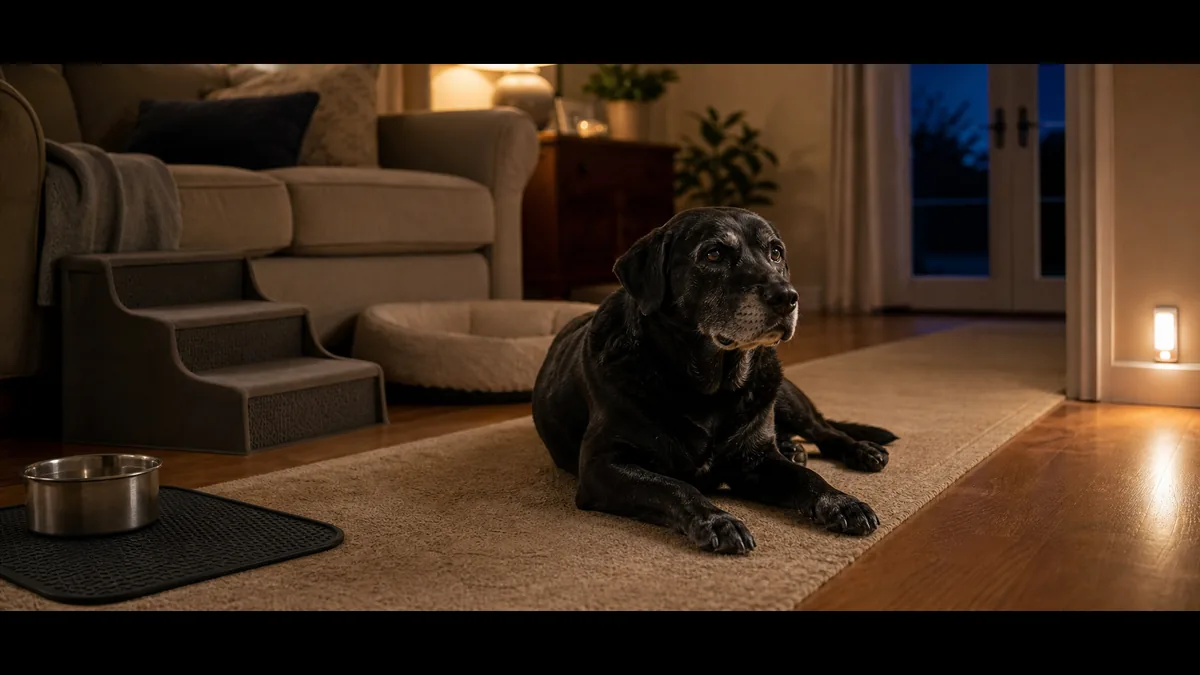
Build a nighttime zone
Nighttime care needs a plan that protects the dog, protects the floor, and protects your sleep as much as possible.
A useful nighttime zone may include:
- a washable pad or waterproof layer,
- an easy-clean floor surface,
- a small safe area instead of full-house wandering,
- water access if appropriate,
- a clear path for potty trips,
- soft lighting if your dog gets disoriented.
Some owners use playpens or gates. Some use washable whelping pads. Some use human incontinence pads because they are cheaper than pet-branded ones. The right setup depends on the dog’s size, mobility, anxiety level, and accident pattern.
The goal is not to trap the dog. The goal is to reduce danger and mess while giving the owner a chance to sleep.
Track the pattern before buying everything
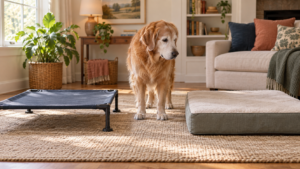
Before buying a harness, stroller, rug system, supplement, calming aid, or expensive bed, track what is actually happening for a few nights.
Write down:
- when your dog wakes,
- whether they pee, pace, bark, drink, or seem confused,
- where slipping happens,
- what surfaces are involved,
- whether pain or weakness seems worse at certain times,
- what helped even a little.
This gives you better questions for your vet and helps you avoid buying products that do not match the actual problem.
Product categories that may help
Think in categories, not random purchases.
Traction
Rubber-backed rugs, runners, yoga mats, toe grips, and rug tape can help a dog feel safer on slick floors.
Support
A rear-support harness or full-body support harness can reduce strain on both dog and owner. Fit matters. Ask for guidance if your dog is large, painful, or unstable.
Cleanup
Washable pads, waterproof covers, and a defined nighttime zone can make accidents less overwhelming.
Containment
Gates or playpens can limit unsafe wandering, but anxious dogs may need a gentler setup.
Calming and medical support
Massage, pain control, cognitive support, and prescription medication may be discussed with a veterinarian. Do not start, reuse, or change medication without veterinary guidance. The FDA warns that human pain relievers and medication prescribed for another dog may harm a pet.
A calmer first step
If your senior dog is slipping, pacing, or waking you up every night, do not start with a giant shopping list.
Start with one page:
- Where is the dog unsafe?
- When is sleep breaking down?
- What needs a vet call?
- What simple home change can reduce the problem tonight?
Match the next step to the problem you can see. For slipping or lifting support, use the Mobility & Support guide. For rugs, gates, lighting, and safer room setup, see Home Safety & Daily Living. If nighttime rest is the main problem, compare options in Beds & Rest. For accidents and washable protection, use the Incontinence & Cleanup guide.
Editorial review and sources
Editorially reviewed and updated by the Well Walked Dog Editorial Team on July 16, 2026. The health and safety statements in this article were checked against the veterinary and animal-health sources below. This article provides general education and does not replace care from your veterinarian.