Camping with your dog can be a great trip, but it works best when you plan for the practical parts: campground rules, safe containment, weather, wildlife, ticks, food storage, and whether your dog will actually be comfortable sleeping outside.
This guide is for regular dog owners planning a campground, cabin, RV, or tent-camping trip. It is not about packing every possible piece of gear. It is about making the trip safer, calmer, and easier for both you and your dog.
Choose the campground carefully
Start by confirming that dogs are allowed, then read the details. “Dog-friendly” can still come with limits that affect your trip.
- Are dogs allowed in the campground, cabins, trails, beaches, or day-use areas?
- Are there leash length rules?
- Are certain breeds, sizes, or numbers of dogs restricted?
- Are dogs allowed to be left unattended at the campsite?
- Are vaccination records or proof of rabies vaccine required?
- Are there wildlife warnings, seasonal closures, or heat advisories?
Look beyond the campground’s marketing photos. A quiet shaded site may be much better for a dog than a crowded site beside a busy road, bathhouse, playground, or lake access point.
Match the trip to your dog
Some dogs love camping right away. Others need shorter practice trips first. Be honest about your dog’s age, health, training, confidence, noise sensitivity, prey drive, and comfort around strangers or other dogs.
A dog who barks at every sound, panics in new places, pulls hard on leash, or struggles to settle may need day trips and backyard practice before an overnight camping trip. That is not a failure. It is good planning.
If your dog is very young, older, heat-sensitive, recovering from illness, or taking medication, check with your veterinarian before planning a more demanding trip.
Pack the basics first
Camping adds dirt, distance, weather, and fewer easy backup options. Pack the non-negotiables before you think about extras.
- Your dog’s regular food, plus extra in case plans change.
- Fresh water and a sturdy travel bowl.
- Leash, harness or collar, ID tag, and a backup leash.
- Medication, vaccine records, and emergency contact information.
- Waste bags, towels, wipes, and trash bags.
- A dog first-aid kit.
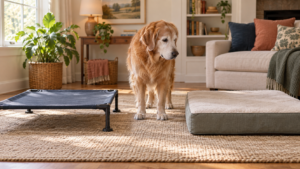
- A bed, blanket, crate, or mat your dog already knows.
For a fuller packing list, use The Dog Travel Packing Checklist before you leave.
Set up a safe dog area at camp
When you arrive, set up your dog’s area before the campsite gets busy. Give your dog a clear place to rest, drink water, and stay out of the cooking area.
A crate, pen, mat, or secure leash setup can help, depending on campground rules and your dog’s temperament. Do not rely on a loose tie-out without supervision. Dogs can tangle, slip gear, chew through lines, or panic if another animal comes close.
Keep food, trash, scented items, and medications secured. This protects your dog and reduces the chance of attracting wildlife.
Watch weather, heat, and cold
Dogs can overheat quickly, especially in direct sun, humid weather, or after hiking. Shade and water are not optional. Plan activity for cooler parts of the day and give your dog real rest breaks.
Cold weather matters too. Short-coated, small, senior, or very young dogs may need extra bedding or a coat at night. If the temperature is uncomfortable for your dog, adjust the plan instead of forcing the trip.
Be careful with trails, water, and wildlife
Before hiking, check whether the trail allows dogs and whether the terrain fits your dog. Rocky paths, hot sand, steep climbs, cactus, foxtails, and long exposed stretches can make a trail harder than it looks.
Keep your dog on leash where required, and use extra caution near wildlife. Even friendly dogs can chase animals, disturb nesting areas, or get hurt by snakes, porcupines, skunks, coyotes, or larger wildlife.
If your dog will be near water, do not assume they can swim safely. Moving water, cold water, slippery banks, and hidden drop-offs can be dangerous. A well-fitted dog life jacket is smart for boating, paddling, or uncertain swimming areas.
Check for ticks, burrs, and sore paws
At least once a day, check your dog’s paws, ears, belly, armpits, tail area, and between the toes. Look for ticks, burrs, cuts, swelling, limping, or irritated skin.
Keep flea and tick prevention current based on your veterinarian’s guidance. If you find an attached tick, remove it carefully and monitor your dog after the trip.
For injuries, stomach trouble, heat concerns, or anything that feels urgent, use the nearest veterinary clinic instead of trying to wait it out. The dog first-aid basics guide is a good starting point for what to pack and watch for.
Be a good campground neighbor
Good dog camping manners are simple: clean up, control your dog, respect quiet hours, and do not let your dog approach people, dogs, tents, or campsites without permission.
If your dog barks at night, gets stressed by nearby campers, or cannot settle, take it seriously. A shorter trip, quieter campground, or more practice may be better next time.
Simple dog camping checklist
- Confirm campground pet rules before booking.
- Pack food, water, medications, records, leash, ID, and cleanup supplies.
- Bring a safe rest setup: crate, mat, bed, blanket, or pen if allowed.
- Secure food, trash, scented items, and first-aid supplies.
- Plan around heat, cold, trail conditions, and your dog’s fitness.
- Check paws, coat, ears, and skin after hikes.
- Keep your dog leashed and respectful around other campers.
The best dog-friendly camping trip is not the most ambitious one. It is the one your dog can handle safely, comfortably, and calmly. Start with a realistic plan, keep the basics covered, and build from there.
Plan the ride as carefully as the campsite
For older dogs, getting into the vehicle, staying restrained, and resting comfortably can determine whether camping is realistic. The Senior Dog Travel & Car Access guide covers vehicle entry, restraint, hydration, seat protection, and portable rest as separate decisions.