Flying with a dog takes more planning than a normal road trip. Airline rules can be strict, policies can change, and not every dog is a good fit for air travel. Before you book, the main question is not “Can dogs fly?” It is “Can my dog fly safely and legally on this specific trip?”
This guide will help you check the right details before you buy a ticket, choose a carrier, or assume your dog can come with you.
Start with the airline before anything else
Do not rely only on a general travel article, social media post, or old forum answer. Go directly to the airline’s current pet policy and call if anything is unclear. Rules can vary by airline, aircraft, destination, time of year, and whether your dog is traveling in the cabin or another approved method.
Before booking, confirm:
- whether dogs are accepted on your route
- whether your dog can travel in the cabin
- carrier size requirements
- weight or breed restrictions
- pet fees
- how to reserve a pet spot
- check-in instructions
- whether any health certificate or vaccine proof is required
- rules for layovers, international flights, or connecting airlines
Pet spots may be limited, so do this before you build the rest of the trip around your dog flying.
Know whether your dog is a realistic cabin traveler
Many owners picture their dog sitting calmly under the seat, but that only works for dogs who fit the airline’s carrier rules and can stay contained for the trip. For in-cabin travel, your dog usually needs to remain in an approved carrier that fits under the seat in front of you.
Think honestly about your dog:
- Can they fit comfortably in the required carrier?
- Can they rest inside it without constant barking, scratching, or panic?
- Can they handle crowds, airport noise, security lines, and waiting?
- Do they have health issues that make flying risky?
- Are they a flat-faced breed, senior dog, puppy, anxious dog, or medically fragile dog?
If you are unsure, talk to your veterinarian before booking. Some dogs are better off staying home with trusted care or traveling by car when that is realistic.
Choose the carrier early
Do not buy a carrier the night before your flight. Check the airline’s measurements first, then choose a carrier that fits those rules and gives your dog as much comfort as possible within them.
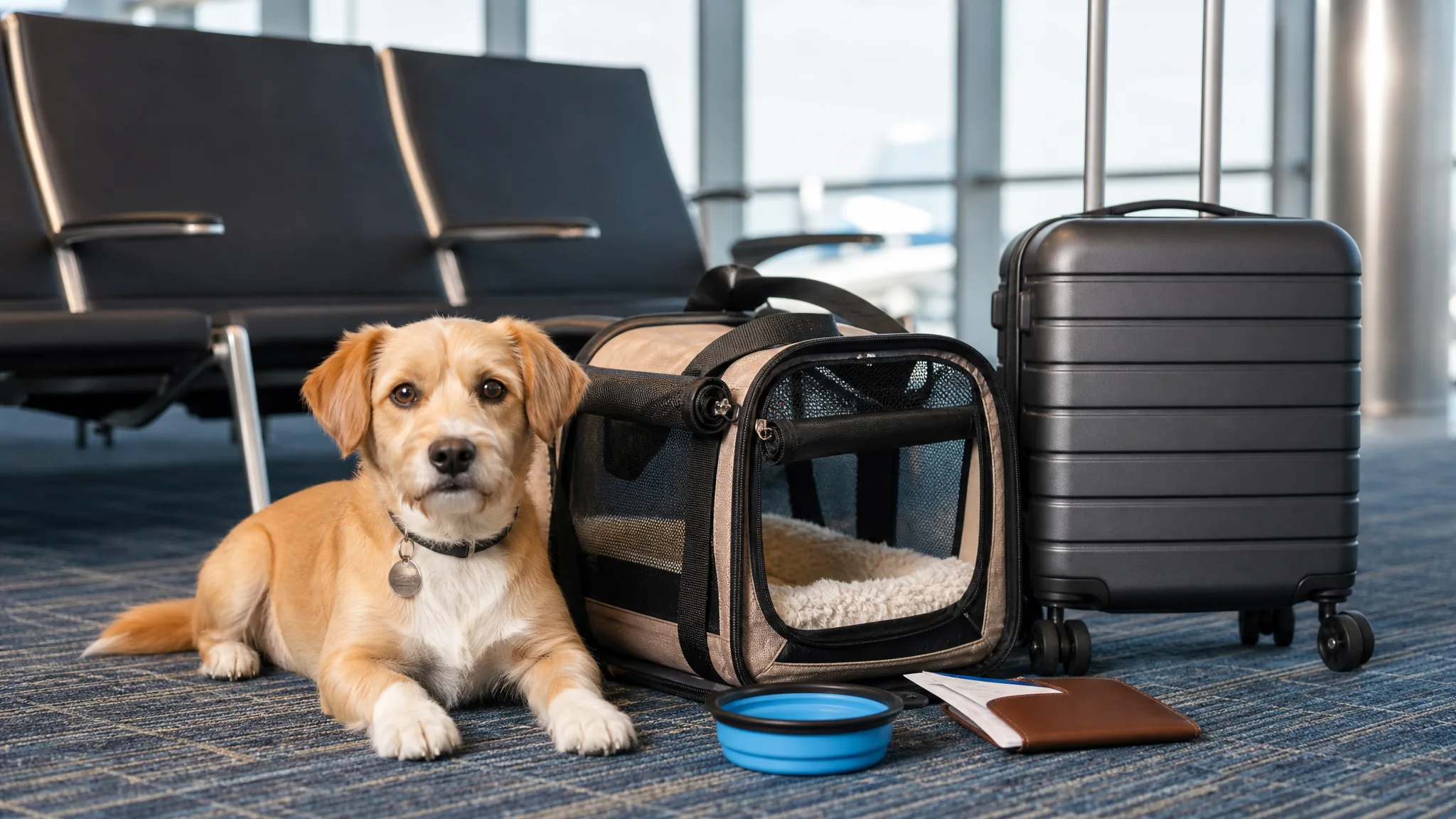
Look for good ventilation, secure closures, a comfortable base, and a shape that works under an airline seat. Then let your dog practice with it well before travel day. Feed treats near it, let your dog rest inside with the door open, and build up short closed-door sessions slowly.
The goal is for the carrier to feel familiar before the airport adds noise, people, lines, and waiting.
Check health paperwork and vaccine records
Some trips require health paperwork. Some do not. Requirements can depend on airline, destination, state, country, timing, and whether the trip is domestic or international.
For domestic travel, ask the airline and your vet what, if anything, is required. For international travel, start much earlier. Destination rules may include microchip requirements, rabies timing, vaccines, testing, treatments, permits, or official health certificates. USDA APHIS recommends working with a USDA-accredited veterinarian as soon as you decide to travel internationally with a pet.
Keep digital and printed copies of your dog’s records. If you need a plain-English refresher, read Dog Vaccines: A Plain-English Guide for Owners.
Plan the airport routine
Airport day is easier when you already know the order of events. Check the airline’s pet check-in process. Find out whether you need to go to the counter, what security screening looks like, and where the pet relief areas are located.
Give yourself extra time, but not so much that your dog sits in the airport for hours longer than needed. Offer a potty break before entering the airport if possible. Keep your dog secured, and do not open the carrier in busy areas unless airport staff instruct you to do so.
Pack a small flight kit
Pack light, but do not forget the basics. Your dog’s travel bag should be easy to reach and simple to manage while you are handling luggage, documents, and the carrier.
- leash and collar or harness with ID
- printed vaccine or health records if needed
- small amount of food or treats
- collapsible water bowl
- waste bags
- absorbent pad or liner for the carrier
- wipes or paper towels for small messes
- any medication your vet has prescribed
For the rest of the trip, use The Dog Travel Packing Checklist so you are not rebuilding your list from memory.
Be careful with food, water, and medication
Ask your vet how to handle feeding and water before the flight, especially if your dog gets carsick, has a medical condition, or takes medication. Do not give sedatives, calming supplements, or new medications just because someone online recommended them.
If your dog needs medication for travel anxiety, nausea, or another condition, that should be a vet-guided plan tested safely before travel day when possible.
Book the stay with the flight in mind
The flight is only one part of the trip. Make sure your hotel, rental, or family stay is ready for your dog too. After a flight, many dogs need a calm place to potty, drink water, decompress, and settle.
Before booking the room, review How to Choose Dog-Friendly Travel Accommodations. A good room setup can make the whole travel day easier.
Do not misuse service animal rules
If your dog is a pet, follow the pet policy. Do not misrepresent a pet as a service animal to avoid fees or restrictions. It creates problems for other travelers, staff, and people who rely on trained service animals.
If you travel with a trained service animal, check the current airline and government requirements that apply to service animal travel specifically.
When flying may not be worth it
Sometimes the kindest choice is not to fly with your dog. If your dog is too large for cabin travel, panics in confinement, has serious health risks, struggles with heat or breathing, or would spend most of the trip stressed, look at other options.
That might mean driving, choosing a closer destination, using a trusted sitter, or boarding with a place your dog already knows. The best travel plan is the one that keeps your dog safe, not the one that looks easiest on paper.
A simple pre-booking checklist
- Check the airline’s current pet policy directly.
- Confirm your dog can travel on that route.
- Confirm carrier size and pet reservation rules.
- Ask your vet whether flying is safe for your dog.
- Confirm vaccine, health certificate, or destination requirements.
- Practice with the carrier before travel day.
- Plan potty breaks and pet relief areas.
- Book dog-friendly accommodations that fit your dog’s needs.
Flying with a dog can work well for the right dog, the right route, and the right preparation. The key is to check the rules early, be honest about your dog’s comfort, and plan the whole trip around safety rather than assumptions.
For the ground portion of the trip
Airline approval does not answer how your dog will ride to the airport, enter the vehicle, hydrate, or rest at the destination. The Senior Dog Travel & Car Access guide covers those separate ground-travel needs. Always follow the airline’s own carrier and restraint rules for the flight.