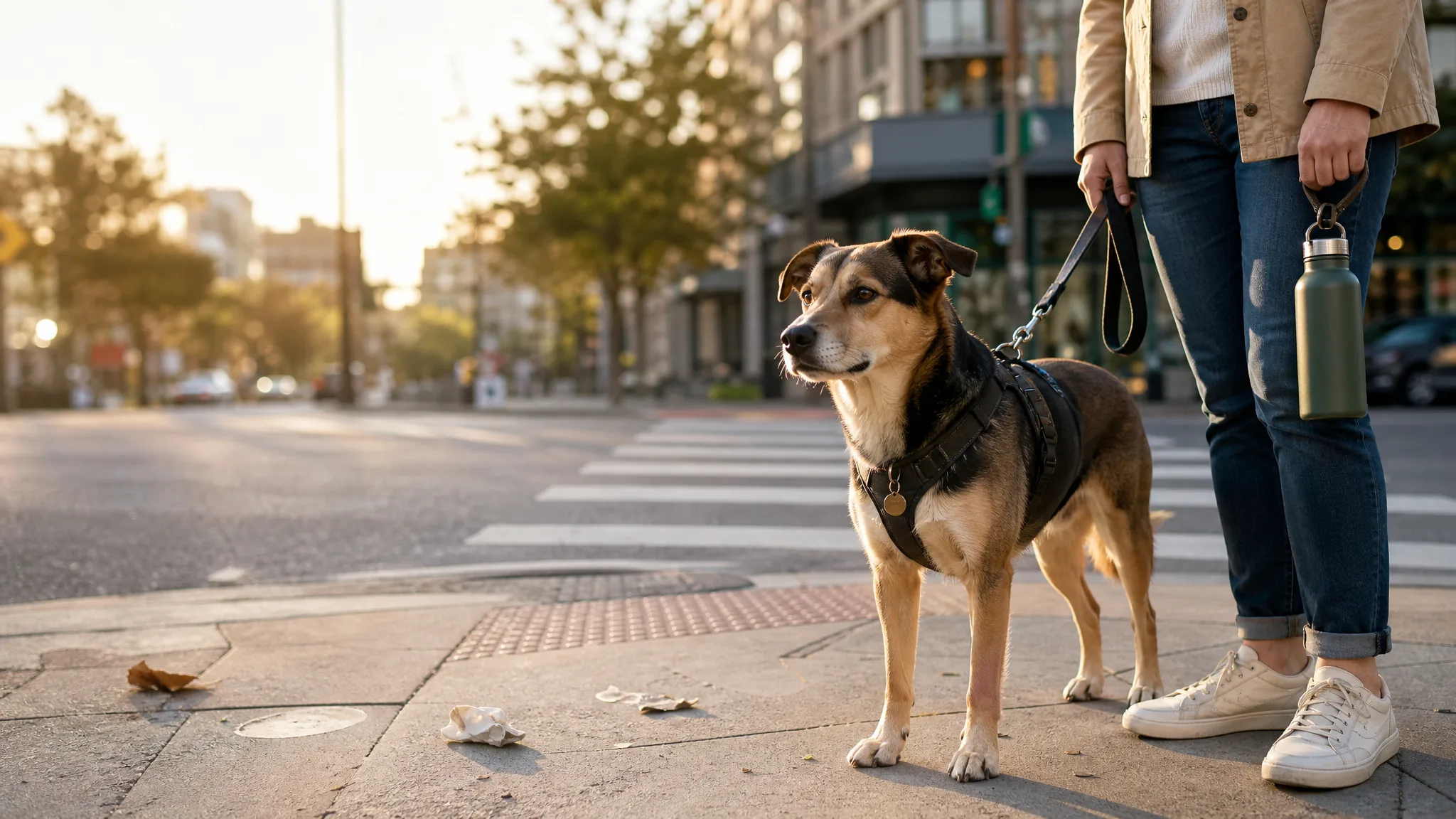
City life can be great for dogs. There are new smells, regular walking routes, parks, patios, people to watch, and plenty of chances to practice good manners. The challenge is that city walks also come with a few risks that are easy to miss when they become part of the daily routine.
This is not a reason to avoid city walks. It is a reason to build better habits. A little planning can make everyday outings safer, calmer, and more enjoyable for both of you.
1. Traffic and fast sidewalk decisions
The most obvious city risk is traffic, but the real problem is often speed. A dog sees another dog across the street. A scooter comes up behind you. A delivery driver blocks the sidewalk. Suddenly you have to make a quick decision with a leash in your hand.
Use a regular leash, not a long retractable leash, near roads, parking lots, elevators, busy sidewalks, or outdoor dining areas. Keep your dog close before corners and crosswalks. If your dog tends to lunge, pull, or zigzag, work on leash skills in quieter spots before expecting perfect behavior in a busy area.
It also helps to teach a simple pause cue at curbs. You do not need anything fancy. The habit is the point: stop, check the street, then cross together.
If pulling is a common problem, start with Loose Leash Walking: Simple Fixes for Dogs That Pull. Better leash control makes almost every other city risk easier to manage.
2. Hot pavement and rough surfaces
Sidewalks, asphalt, parking lots, and dark surfaces can get uncomfortable fast in warm weather. Dogs also deal with rough concrete, broken pavement, salt, grit, and sharp edges that people do not notice through shoes.
On hot days, shift walks earlier or later. Choose shaded routes when you can. Bring water on longer outings. If the ground feels too hot for your bare hand to stay there comfortably, it is worth rethinking the route or timing.
Check your dog’s paws after city walks, especially if they are limping, licking, or suddenly slowing down. Look for redness, cuts, cracked pads, or debris stuck between toes. Call your vet if you see burns, deep cuts, swelling, or pain that does not settle quickly.
3. Street food, trash, and mystery puddles
City sidewalks can be full of things a dog wants to inspect: dropped food, gum, wrappers, spilled drinks, cigarette butts, medication, trash, standing water, and unknown puddles near curbs or alleys.
The best habit is to scan a few steps ahead instead of reacting after your dog already has something in their mouth. Keep walks moving through messy areas. Reward your dog for checking in with you. Practice “leave it” in low-distraction settings before using it around real sidewalk temptations.
If your dog may have eaten something toxic, do not wait to see what happens. Call your veterinarian, an emergency clinic, or a pet poison hotline. The dog first-aid basics guide has emergency contact ideas worth saving before you need them.
4. Crowded greetings with dogs and people
Not every city dog wants to meet every person or dog on the sidewalk. Tight spaces make greetings harder because dogs have less room to move away. Even friendly dogs can become tense when leashes tangle, people lean over them, or another dog rushes straight toward their face.
It is okay to skip greetings. A simple “we’re training today” or “not today, thanks” is enough. Step to the side, create space, and keep moving. If your dog gets stiff, hides behind you, barks, lunges, freezes, or repeatedly tries to avoid contact, listen to that information.
For dogs who are still learning city manners, choose quieter times and practice calm passing at a distance. You can build toward busier streets later.
5. Too much stimulation, not enough recovery
City walks can be mentally tiring. Traffic noise, other dogs, elevators, bikes, scooters, construction, patios, smells, and tight hallways all add up. Some dogs handle this well. Others look fine at first and then melt down later.
Watch for signs that your dog is overloaded: frantic sniffing, refusing treats they normally like, scanning constantly, barking more than usual, pulling harder, shaking off repeatedly, or struggling to settle after the walk.
A better walk is not always a longer walk. Sometimes the best city routine is a short potty walk, a calmer sniff route, and a little indoor enrichment afterward. The daily walk routine guide can help you shape a walk that fits your dog instead of forcing every outing to be big and busy.
A simple city walk checklist
- Use a regular leash near streets, crowds, elevators, and parking areas.
- Pause at curbs and corners before crossing.
- Check pavement temperature and choose shade when possible.
- Scan ahead for food, trash, glass, unknown puddles, and other dogs.
- Skip greetings when your dog needs space.
- Carry water on warm days or longer walks.
- Check paws after rough, hot, icy, or messy routes.
- Keep vaccine and ID records current if your dog uses daycare, grooming, boarding, or shared dog spaces.
For record-keeping and shared-space requirements, the dog vaccines guide is a helpful companion.
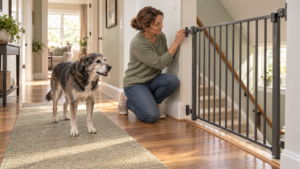
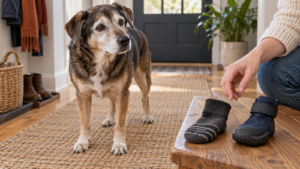
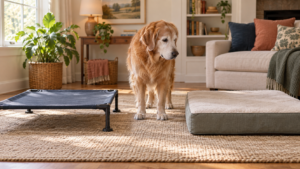
Many of the same route-planning ideas continue indoors. If your dog is older or becoming less steady, the senior dog home safety product guide covers traction paths, stair controls, nighttime lighting, and other ways to reduce household hazards.
City dogs can thrive with the right habits
City dog ownership does not have to feel stressful. Most of the risk reduction comes from small choices: better leash control, smarter timing, cleaner routes, fewer forced greetings, and knowing when your dog has had enough.
The goal is not to make every walk perfect. The goal is to help your dog move through the city with more confidence and fewer surprises.