A dog who pulls on leash is not trying to ruin the walk. Most of the time, pulling works because it gets the dog closer to what they want: smells, grass, other dogs, people, shade, home, or just forward movement.
That is good news. If pulling is partly a habit, you can change the habit. You do not need a perfect heel, a harsher collar, or a forty-minute training lecture in the middle of the sidewalk. You need a repeatable way to show your dog that a loose leash is what keeps the walk moving.
This guide is for everyday dog owners who want calmer neighborhood walks. It works best for normal pulling and excitement. If your dog lunges, bites, panics, redirects onto you, or cannot recover after seeing another dog or person, get help from a qualified positive-reinforcement trainer or veterinary behavior professional.
Related reading: For the bigger walking framework, start with How to Build a Better Daily Walk Routine for Your Dog. If you are preparing for a young dog, the New Puppy Checklist can help with first-week setup and walking basics.
What Loose Leash Walking Actually Means
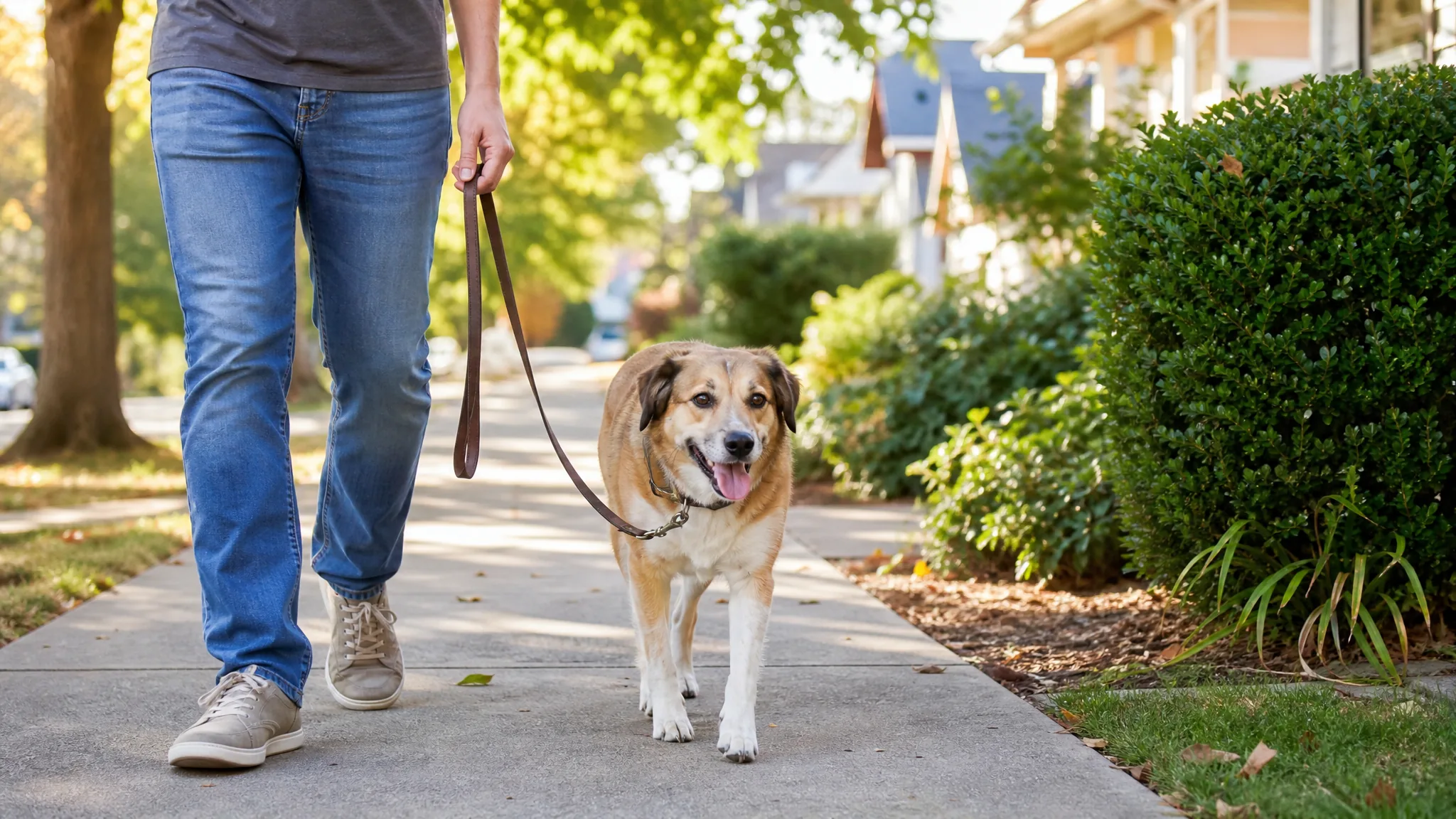
Loose leash walking does not mean your dog has to stare at you or march beside your knee for the whole route. For normal daily walks, the goal is simpler:
- The leash has some slack most of the time.
- Your dog can sniff and look around without dragging you.
- You can slow down, stop, or turn without a wrestling match.
- Both of you finish the walk less frustrated.
That standard is more realistic for family dogs. It also leaves room for sniffing, which matters. A walk should not be one long obedience drill.
Why Dogs Pull on Walks
Dogs pull because the world is interesting and humans are slow. They also pull because they have been rewarded for it, usually by accident. If your dog pulls toward a tree and eventually reaches the tree, the pulling worked. If they drag you to greet a person and still get to say hello, the pulling worked.
Some dogs also pull harder when the leash is constantly tight. Pressure on the collar or harness can make them lean forward even more. That is one reason yanking back usually does not solve the problem. It turns the walk into a tug-of-war.
Start Before the Sidewalk
If your dog explodes with excitement when the leash appears, the walk is already starting too high. Spend one minute making the beginning calmer.
- Put treats and waste bags in your pocket before you call your dog.
- Clip the leash when your dog has four paws on the floor, even if it takes a few resets.
- Pause at the door instead of letting your dog launch through it.
- Step outside when your dog gives you a small moment of attention or stillness.
This does not need to be formal. You are just teaching the pattern: calm behavior opens the next part of the walk.
Use the “Slack Makes Us Move” Rule
The cleanest rule is this: when the leash is loose, the walk continues. When the leash gets tight, forward movement stops.
At first, you may stop a lot. That is normal. The point is not to punish your dog. The point is to make pulling less useful. Stand still, wait for your dog to shift their weight back, look at you, or let the leash soften. The moment there is slack, calmly move again.
Keep your timing simple. Do not lecture, yank, or repeat your dog’s name twenty times. Stop, wait, move. Your dog learns faster when the pattern is boring and consistent.
Reward the Moment Before Pulling
Many owners wait until the dog is already at the end of the leash. Try watching for the earlier moment: your dog’s body leans forward, their ears lock onto something, or their pace starts to surge.
That is your chance to help. Say “yes,” offer a treat near your leg, change direction, or invite your dog to sniff a nearby safe spot. You are rewarding your dog before the leash turns into a tow rope.
Small rewards work well here. A pea-sized treat, a calm marker word, or permission to sniff can all reinforce the behavior you want.
Practice in Short Sections
Loose leash walking falls apart when the route is too long or too distracting. Pick one short section of the walk for practice. It might be from your driveway to the corner, or one quiet side of the block.
For that section, be consistent. Reward check-ins. Stop when the leash tightens. Turn around if your dog keeps surging. After a few good minutes, give your dog a sniff break or switch to a more relaxed walk.
Five focused minutes are more useful than thirty annoyed minutes.
Use Sniff Breaks on Purpose
Some pulling happens because the dog is trying to get to smells. Instead of fighting every sniff, build sniffing into the walk.
Try a simple pattern: walk together for a short stretch, then say “go sniff” and let your dog investigate a safe patch of grass or a tree. After a little while, say “let’s go” and move on.
This gives your dog a reason to cooperate. They learn that walking with you does not mean losing all access to the good stuff. It means the good stuff happens in a more organized way.
Choose Easier Routes While You Train
Do not start loose leash practice on the busiest street in the neighborhood. If your dog pulls hardest around barking fence dogs, school pickup, scooters, or other dogs, choose a quieter route for training.
That is not avoiding the problem forever. It is setting up better repetitions. Your dog needs enough space and calm to notice what you are teaching.
If your dog is still young and new to the world, keep expectations even smaller. Puppies need short, positive outings and safe exposure, not long leash battles. If you are preparing for a new puppy, the New Puppy Checklist covers the basic gear and first-week setup.
Gear Can Help, But It Is Not the Whole Fix
A comfortable, well-fitted harness can make training easier, especially if your dog pulls hard. A front-clip harness may reduce the amount of leverage your dog has when they surge forward. It should still be paired with training, rewards, and easier routes.
Avoid gear that works by causing pain or fear. If you are not sure what is appropriate for your dog’s size, body shape, or health, ask your veterinarian or a qualified trainer.
Gear Example: PetSafe Easy Walk Harness
For a product mention, the PetSafe Easy Walk Harness is one relevant option because it is a front-clip walking harness made for leash manners work. It fits this article naturally, but it should be presented as one option to consider, not a magic fix.
Product note: Check sizing, fit, return policies, and current product details before buying. A harness can help manage pulling, but it does not replace patient training.
Simple loose leash practice plan
For one week, pick a short stretch of sidewalk or a quiet part of the block. Practice only there. Stop when the leash gets tight, reward the moment it softens, and give your dog a sniff break after a few good repetitions. Short, clean practice beats a long walk where both of you get frustrated.
You can track this in the Better Dog Walk Planner from the daily walk routine guide.
Common Mistakes That Keep Pulling Going
- Letting pulling work sometimes. If pulling gets rewarded on half the walk, the habit stays strong.
- Training for too long. Tired owners and overstimulated dogs do not learn well.
- Using treats only after a big pull. Reward the slack leash and early check-ins, not just the recovery.
- Picking routes that are too hard. Make the environment easier before you expect better behavior.
- Skipping sniff breaks. Dogs need legal ways to enjoy the walk.
A Simple Loose Leash Practice Plan
Use this for one week before making it harder:
- Day 1-2: Practice calm leash-up and door pauses.
- Day 3-4: Choose one quiet block. Stop every time the leash gets tight. Move when it softens.
- Day 5: Add planned sniff breaks with a cue like “go sniff.”
- Day 6: Reward the moment your dog checks in or slows down before the leash tightens.
- Day 7: Repeat the easiest successful version. Do not rush to a harder route yet.
If the week feels messy, repeat it. Loose leash walking is a habit, not a trick your dog learns once and keeps forever in every environment.
When Pulling Is More Than Pulling
Some dogs are not just excited. They are scared, frustrated, reactive, or overwhelmed. If your dog barks and lunges at dogs, people, bikes, cars, or children, the answer is not simply “make them walk nicely.” They may need more distance, a behavior plan, and professional help.
The same is true if your dog suddenly starts pulling differently, limping, slowing down, coughing, or showing pain. Medical changes belong with your veterinarian.
Final Takeaway
Loose leash walking gets better when the rules are clear and the walk still meets your dog’s needs. Start calmer. Practice in short sections. Stop letting a tight leash move the walk forward. Reward slack before the pulling starts. Give your dog sniff breaks on purpose.
You are not trying to control every step. You are teaching your dog that walking with you is the easiest way to keep exploring the world.