“Dog-friendly” can mean very different things depending on where you stay. One hotel may welcome dogs with clear rules and easy outdoor access. Another may allow dogs on paper but charge high fees, limit sizes, restrict breeds, or put you in a room that makes every potty break a hassle.
Before you book, it helps to slow down and ask better questions. A good dog-friendly stay is not just about whether dogs are allowed. It is about whether the place fits your dog, your trip, and the way you actually travel.
Start by checking the actual pet policy
Do not rely only on a search filter that says “pets allowed.” Go to the property’s website, read the pet policy, and call or message if anything is unclear. Policies can change, and third-party booking sites do not always show the full details.
Confirm these basics before you book:
- whether dogs are allowed, not just “pets” in general
- weight limits
- breed or number-of-dog restrictions
- pet fees, cleaning fees, or deposits
- whether fees are per night, per stay, or per dog
- whether dogs can be left alone in the room
- crate requirements
- where dogs are allowed on the property
- proof of vaccines or records they may ask for
If a policy feels vague, ask directly. A five-minute call can save you from a stressful check-in.
Look beyond the room
The room matters, but the setup around the room matters too. A dog-friendly hotel on the tenth floor with no nearby potty area may be fine for some dogs and terrible for others. A rental with a fenced yard may sound perfect until you learn the fence has gaps or shared access.
Think through the daily routine:
- How easy is it to get outside?
- Is there a safe place for potty breaks?
- Are hallways, elevators, or stairs likely to stress your dog?
- Is parking close enough for unloading dog gear?
- Are there busy roads, restaurant patios, or loud areas nearby?
- Will your dog settle if they hear people walking past the door?
For dogs who are sensitive to noise, elevators, or tight spaces, a quieter room, ground-floor option, cabin, or small rental may be a better fit than a busy hotel hallway.
Ask whether your dog can be left alone
This is one of the biggest details owners miss. Some places do not allow dogs to be left alone at all. Others allow it only if the dog is crated. Some require a phone number at the desk in case your dog barks or seems distressed.
Be realistic about your dog. If they bark at hallway noise, scratch doors, panic in a crate, or struggle in new places, plan activities where they can come with you or arrange safe care. Do not assume a tired dog will automatically sleep through an unfamiliar room.
Match the stay to the type of trip
Different trips call for different accommodations. A one-night road trip stop may only need easy parking, quick potty access, and a clean place to sleep. A weeklong vacation may need more space, a kitchen, walking routes, laundry, and a calmer setup.
For outdoor trips, a cabin, campground, or rental near trails may make more sense than a hotel in town. If camping is part of the plan, read Dog-Friendly Camping: A Practical Guide for Safe, Easy Trips before you go.
Check the surrounding area
A property can be dog-friendly while the area around it is not very convenient. Before booking, look at the map. Check for nearby sidewalks, grass patches, parks, rest areas, veterinary clinics, and roads that may be hard to cross safely.
If you are staying in a busy downtown area, plan for traffic, hot pavement, food on sidewalks, and crowded greetings. The city dog risks guide has practical reminders that apply to travel days too.
Pack for the room, not just the drive
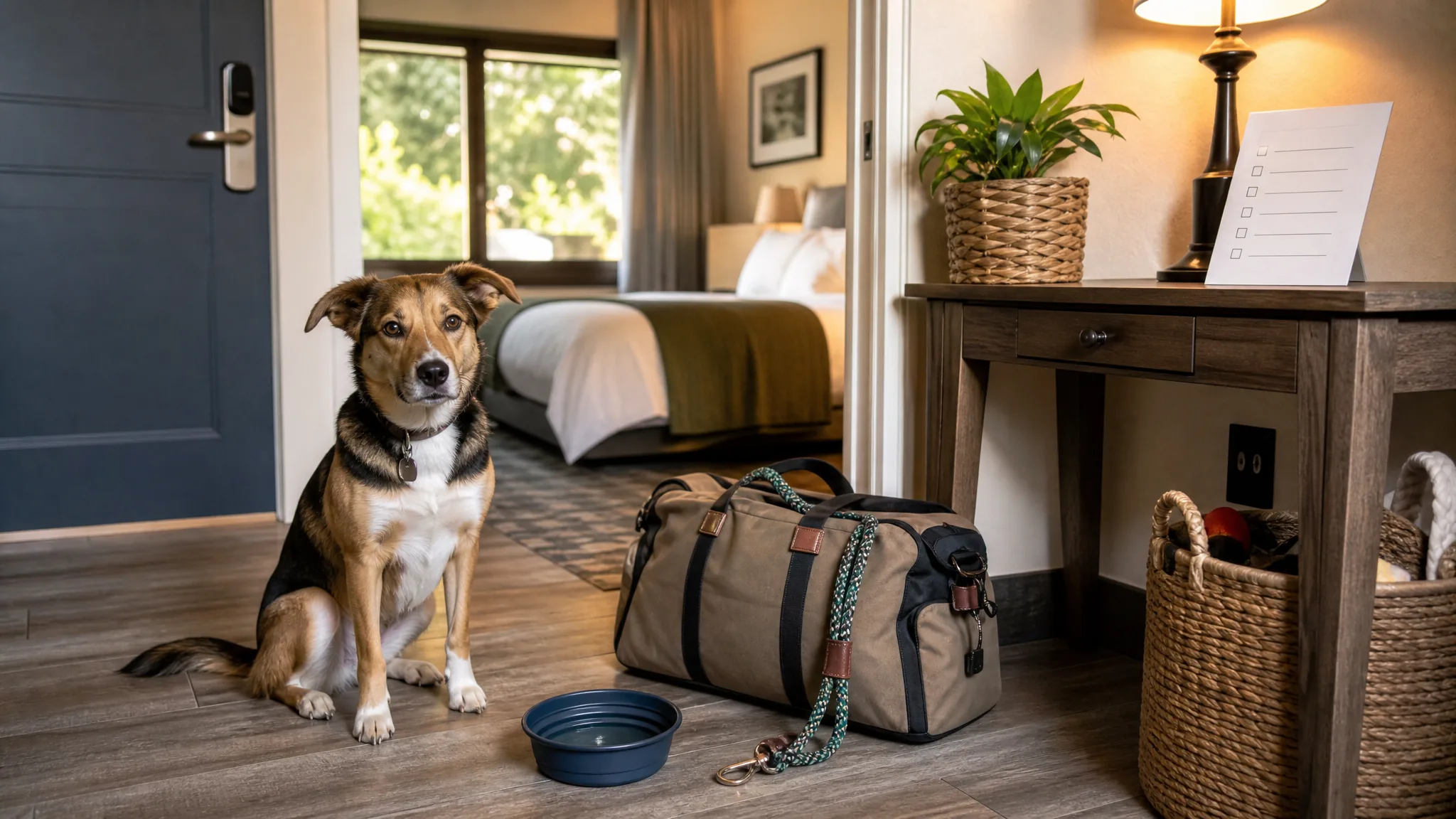
Most dog travel packing lists focus on the car, but the room matters too. Bring the things that help your dog settle and keep the stay respectful for the property.
- food, treats, and medications
- bowls and water
- leash, harness, collar, and ID tags
- crate, bed, mat, or blanket if your dog uses one
- waste bags and cleanup supplies
- towel for wet paws
- vaccination records if required
- first-aid basics and emergency contacts
For a fuller packing list, use The Dog Travel Packing Checklist. For health records, the dog vaccines guide can help you understand what to keep organized.
Watch for red flags before booking
Some places technically allow dogs but are not a good fit. Be cautious if the pet policy is hard to find, the fees are unclear, staff cannot answer basic questions, or reviews mention surprise charges, barking complaints, unsafe outdoor areas, or poor communication.
Also skip any place where you would have to hide your dog, ignore rules, or pretend a pet is a service animal. That creates problems for other travelers and can put you in a bad position if something goes wrong.
A simple booking script
Before booking, you can call or message with something like this:
“Hi, I’m planning to stay with one dog. Can you confirm your current dog policy, total pet fees, whether dogs can be left alone in the room, and whether you need vaccine records at check-in?”
If your dog has specific needs, add them. For example, ask about ground-floor rooms, quiet room placement, nearby grass, elevator access, or crate requirements.
The best dog-friendly stay is the one that fits your dog
There is no single best accommodation for every dog. Some dogs do well in hotels. Some settle better in rentals. Some need quiet cabins, ground-floor rooms, short potty routes, or fewer hallway surprises.
Choose the place that makes the daily routine easier, keeps the rules clear, and gives your dog the best chance to rest between outings. That is what turns a dog-friendly stay into a trip that actually feels manageable.
Match the room plan to the travel plan
Once you know the property’s rules and room layout, check how your dog will enter the vehicle, stay restrained, drink, and rest away from home. The Senior Dog Travel & Car Access guide organizes those equipment decisions by job rather than by a generic ranking.