When a senior dog has an accident, the first useful question is not “Which cleaner is strongest?” It is “What got wet?” A washable pad, a dog bed, a rug, upholstery, and a wood floor do not need the same cleanup.
Start by moving your dog to a dry, steady place. Blot or lift the mess without rubbing it farther into the material. Then check the care label or surface instructions before adding water, cleaner, or a machine. If the accidents are new, more frequent, painful, bloody, or paired with straining, increased thirst, weakness, or a behavior change, call your veterinarian. Cleanup products can protect the home, but they cannot explain why the accidents started.
Separate containment, protection, and cleanup
These jobs are easy to blur together, especially at 2 a.m. A pad or mat catches liquid. A waterproof layer protects what is underneath. A surface-compatible cleaner deals with what reached the rug, floor, or furniture. One product rarely does all three well.
- Containment keeps an accident in a predictable area. A washable pad can help beside a bed or near the usual route outside.
- Surface protection adds a barrier under a rest area, pen, or other high-risk spot. It still needs to lie flat and stay steady under an older dog.
- Cleanup removes the mess from the actual material. The correct method depends on the manufacturer or care label, not on a universal pet-stain recipe.
If your dog needs body-worn protection instead, read our comparison of washable pads, dog diapers, and male wraps. That guide covers fit, skin checks, anatomy, and change frequency. This article stays focused on the surface after an accident.
A quick plan by surface
| Surface | First move | Check before cleaning | Common mistake |
|---|---|---|---|
| Washable pad or removable bed cover | Lift it without folding the wet side onto dry fabric | Product wash and dry instructions; whether the inner bed is also wet | Assuming every waterproof backing tolerates heat, bleach, or the same detergent |
| Rug or carpet | Blot or lift excess; keep the dog off the damp area | Fiber, backing, colorfastness, cleaner label, and whether liquid reached the pad below | Scrubbing outward or using a cleaner that the material does not allow |
| Upholstery | Blot with a clean absorbent cloth | Furniture cleaning code, removable-cover label, cushion fill, and colorfastness | Overwetting foam or using a portable extractor without approval from the furniture maker |
| Sealed hard floor | Pick up solids and blot liquid promptly | Floor finish and cleaner compatibility | Treating sealed wood, laminate, vinyl, stone, and tile as the same surface |
| Untreated wood or specialty fabric | Blot gently and protect the area | Manufacturer or professional-care directions | Trying a general pet cleaner that excludes the material |
Use this table as a sorting step, not as a substitute for the label. Even products sold for “carpet and upholstery” may exclude wool, leather, suede, silk, untreated wood, or other finishes.
Washable pads, bedding, and removable covers
Remove the wet layer while your dog is on dry footing. If the accident reached the bed insert, foam, rug, or floor below, separate those pieces so the damp area does not stay hidden.
Paw Inspired describes its current washable dog pads as having a waterproof, nonslip backing and directs owners to wash them when soiled. Drymate describes its current dog playpen mat as absorbent with a waterproof, slip-resistant backing and says it is machine washable. Those statements apply to those products, not every washable pad. Follow the exact wash and dry directions for the item you own.
Before the pad goes into the washer
- Remove solid waste and follow local disposal rules.
- Check whether urine reached the floor or bed below.
- Read the item’s instructions for detergent, water temperature, bleach, softener, and drying. Waterproof backings can have different limits.
- Inspect the backing after washing. Cracking, curling, bunching, or loss of grip can turn a protective layer into a trip or slip hazard.
- Put down a fully dry replacement. A damp pad is not a clean resting surface.
Keep enough washable protection to cover one area while another piece is being cleaned and dried. Buying a bigger stack is not always the answer, though. Two or three pads that fit the actual sleeping area and washer may be more useful than one oversized mat that is difficult to lift when wet.
Rugs and carpet: work from the material outward
Pick up solids first, then blot liquid with a clean absorbent cloth. Press down and lift rather than rubbing across a wider area. Check the rug label or carpet guidance before applying a product.
Nature’s Miracle’s current Advanced Stain and Odor Eliminator for Dogs is one example of an enzymatic cleaner in the Senior Dog Incontinence & Cleanup Products guide. Its manufacturer directs users to test a hidden area for colorfastness, use the product at full strength, keep people and pets away until the treated area dries, and avoid untreated hardwood, leather, suede, silk, and wool specialty fabrics. Its stain and odor directions also differ, which is a good reminder to read the job-specific section of the label instead of improvising.
If liquid has soaked through carpet into the pad below, treating only the visible fibers may miss part of the odor source. The cleaner’s label may call for deeper saturation, while the carpet or floor underneath may limit moisture. When those instructions conflict, stop and ask the flooring manufacturer or a qualified cleaner rather than soaking the area blindly.
When a portable extractor may help
A portable carpet or upholstery extractor is a tool for compatible materials, not a default second step. Check the rug, carpet, or upholstery instructions first. Confirm which solution the machine requires and whether pretreatment is allowed. Too much liquid can push moisture deeper into backing, cushion foam, seams, or the floor beneath.
Do not put a household cleaner into a machine unless both the machine instructions and the cleaning-product label allow it. If the material has a special fiber, unstable dye, glued backing, or an unknown care history, professional cleaning may be the safer choice.
Upholstery: the cushion matters as much as the cover
Blot the surface, then check whether the cover is removable and whether the cushion underneath is wet. A removable cover may have its own laundry directions. The inner foam or fill may need a different process, and soaking it can leave moisture where you cannot see or dry it.
- Find the furniture care label or cleaning code.
- Test any permitted cleaner in a hidden spot and wait for the label’s full test time.
- Use the smallest amount of moisture the approved method requires.
- Keep your dog off the chair or sofa until every treated layer is dry.
- If odor returns after drying, assume the liquid may have reached a deeper layer. Do not keep adding cleaner without checking the cushion construction.
Leather, suede, silk, wool, and vintage or unknown fabrics deserve their own care instructions. A pet-safe claim does not mean a product is safe for every material.
Hard floors: identify the finish first
Remove liquid promptly, then check the flooring maker’s cleaning directions. “Hard floor” can mean sealed hardwood, untreated wood, laminate, luxury vinyl, sheet vinyl, tile, grout, stone, or a coated concrete surface. Water tolerance and cleaner compatibility vary.
Do not use the Nature’s Miracle product discussed above on untreated hardwood; the manufacturer expressly excludes it. Other cleaners have their own limits. If you do not know the floor finish, blot the area, keep your dog away from the damp spot, and get the correct care guidance before applying more liquid.
Watch the route after cleanup. A wet patch, curled pad edge, loose towel, or slick cleaner residue can be harder on a senior dog than the original accident. Dry the floor completely and restore a flat, stable walking path.
Protect the next high-risk spot without creating a new hazard
Place protection where accidents actually happen: under the sleeping area, beside the usual exit route, or beneath a supervised pen. Do not scatter pads across every room. That can make the walking route unpredictable and makes it harder to tell whether the pattern is changing.
Check four things:
- Coverage: Does the pad extend beyond the usual wet spot without blocking a doorway?
- Grip: Does it remain flat when your dog turns, rises, or drags a paw?
- Washability: Will it fit in your washer and dry fully before it is needed again?
- Layering: Can liquid escape between separate pads or collect beneath a waterproof layer?
A large mat may protect more floor, but it can also be heavy when wet and awkward to clean. A smaller pad is easier to rotate, but it must cover the actual accident zone. Measure the place, not just the product listing.
When a cleanup problem needs a veterinary call
VCA describes urinary incontinence as involuntary urine leakage. Wet spots under a relaxed or sleeping dog and dribbling while walking are common signs, and the dog may not appear aware of the leakage. Causes can include urinary tract infection, bladder or urethral problems, neurologic disease, anatomic changes, and other conditions. Diagnosis may involve medical history, urine and blood tests, imaging, or additional examination.
Arrange veterinary guidance when accidents are new, becoming more frequent, or different from your dog’s usual pattern. Call promptly if you notice straining, blood, pain, weakness, a sudden behavior change, increased thirst, difficulty walking, skin irritation, or an inability to pass urine. Keep a short log of the time, place, amount, sleep or activity context, water intake changes, medications, and any other symptoms. That record is more useful than trying a new pad every few days without tracking what changed.
Never punish a senior dog for an accident. The dog may be leaking without awareness, unable to reach the door in time, painful when rising, confused, or dealing with a medical problem.
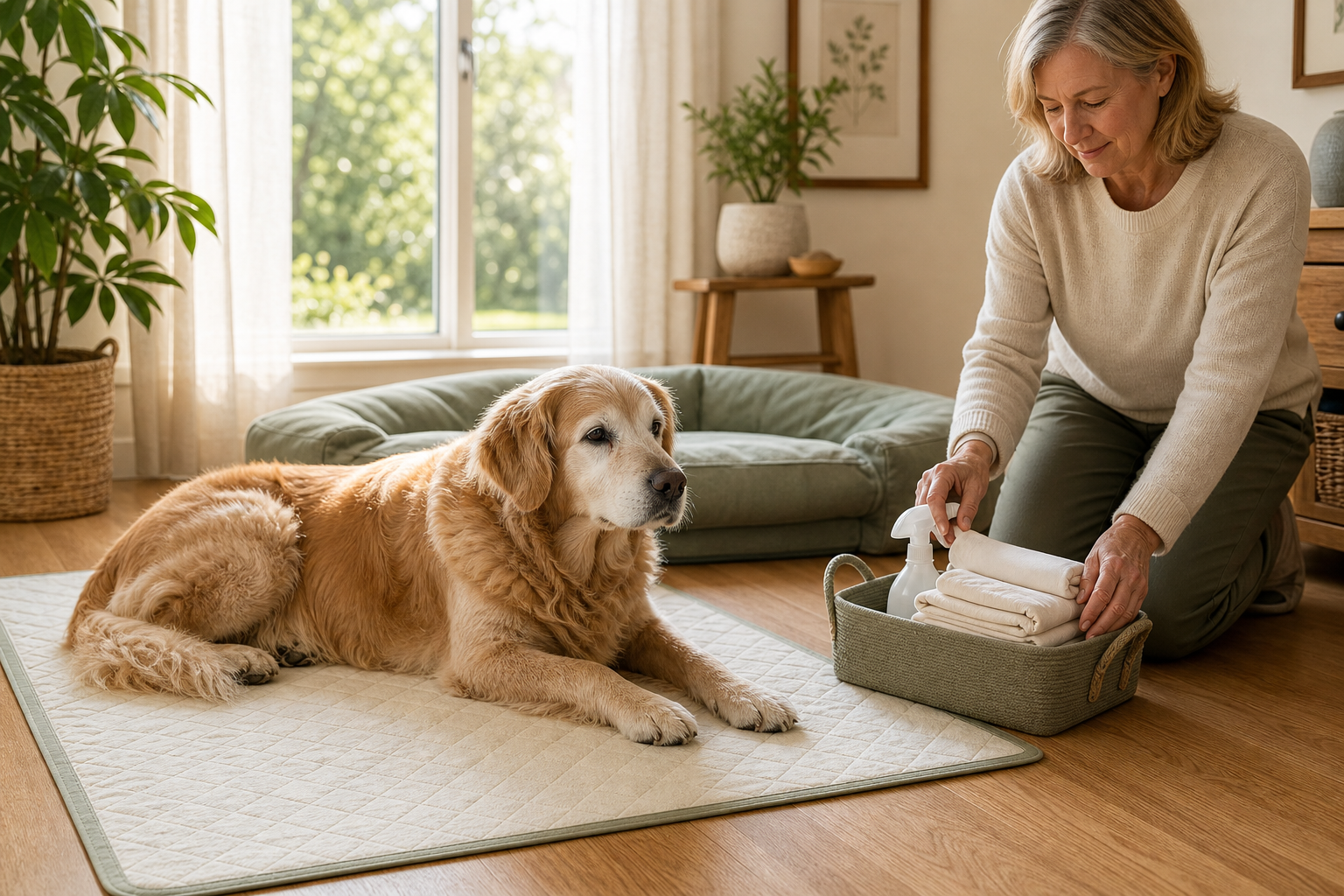
A small cleanup kit that fits the routine
- Clean absorbent cloths for blotting
- Disposable gloves and waste bags
- One surface-compatible cleaner with its label intact
- A dry replacement pad or cover
- A laundry container that keeps soiled fabric separate
- A simple accident log kept near your dog’s care records
Keep the kit close to the high-risk area but out of your dog’s reach. One familiar, label-directed routine is safer than a shelf of half-used cleaners and improvised mixtures.
Sources and research notes
- VCA Animal Hospitals: Urinary Incontinence (Urethral Incontinence) in Dogs — clinical signs, possible causes, and veterinary diagnosis.
- Nature’s Miracle Advanced Stain and Odor Eliminator for Dogs — current directions, colorfastness testing, drying boundary, and excluded surfaces checked August 7, 2026.
- Paw Inspired Washable Dog Pads — current washable-pad construction and stated uses checked August 7, 2026.
- Drymate Dog Playpen Mat — current absorbent layer, waterproof slip-resistant backing, size, and machine-wash statement checked August 7, 2026.
Well Walked Dog uses veterinary and manufacturer sources to explain practical selection and care questions. We did not physically test the products discussed here. Product materials and directions can change, so read the current label and manufacturer instructions for the exact item and surface before use.