
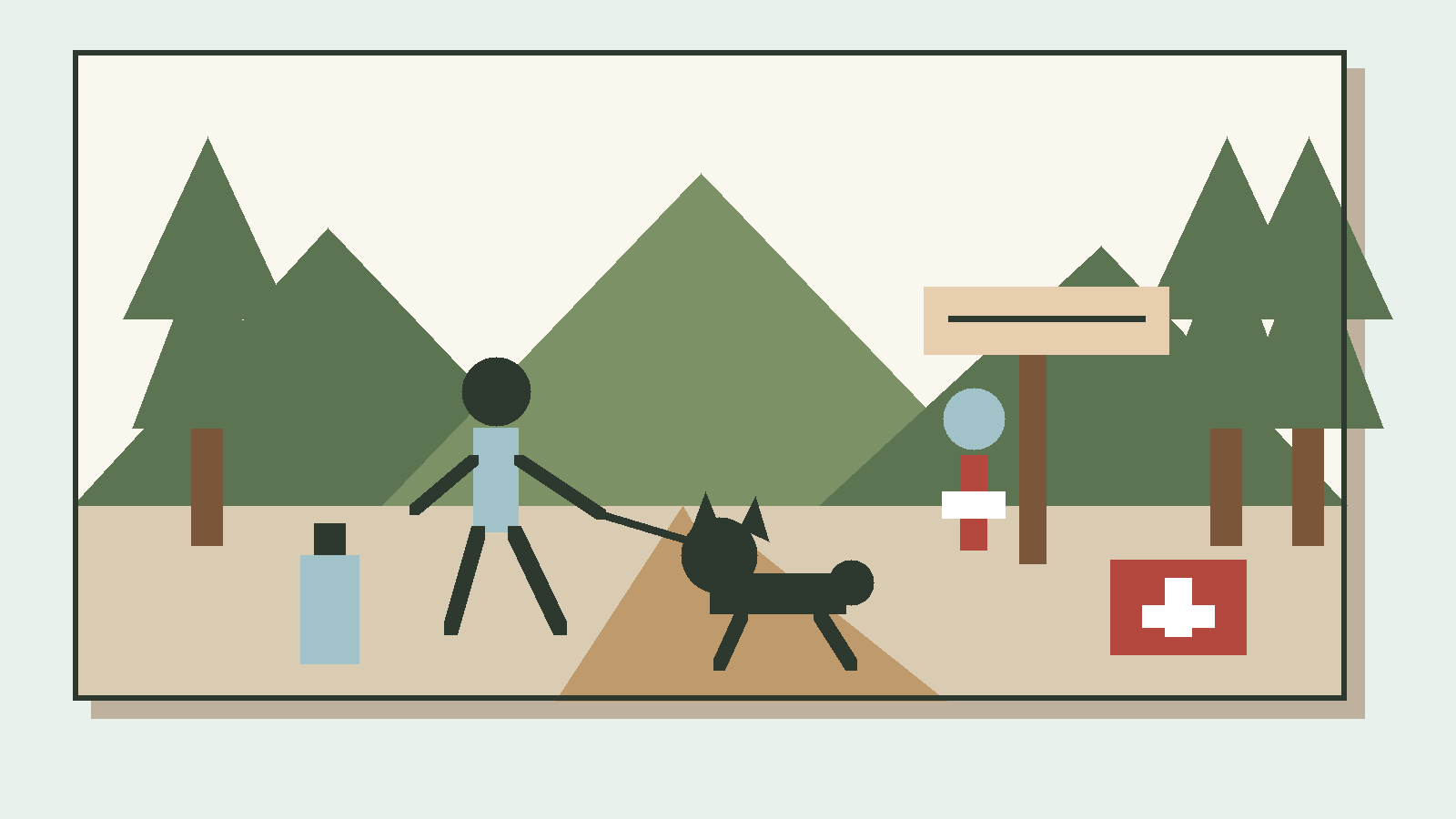
A dog-friendly hiking trail is not just a trail where dogs are technically allowed. It should also fit your dog’s age, fitness, training, paws, confidence, and the conditions that day.
The right trail can give your dog exercise, enrichment, and a calmer kind of adventure. The wrong trail can turn into sore paws, overheating, leash stress, wildlife problems, or a hike that is too much for your dog before you are halfway done.
Use this guide to choose better dog-friendly hiking trails and make smarter decisions before you leave home.
Start by checking whether dogs are actually allowed
Trail rules change by park, season, land agency, wildlife area, and even by individual trail. Before you go, check the official source when possible: park website, forest service page, city trail page, campground office, or posted trailhead rules.
Look for details like:
- whether dogs are allowed on the specific trail
- leash requirements and leash length limits
- seasonal closures for wildlife, snow, heat, or fire risk
- restricted beaches, overlooks, boardwalks, or protected areas
- parking, permit, or day-use rules
Do not rely only on old blog posts or social media captions. A trail that was dog-friendly last year may have different rules now.
Match the trail to your dog, not your wish list
It is easy to choose a hike because the photos look beautiful. For your dog, the more important questions are practical.
- How far can your dog comfortably walk?
- Can your dog handle hills, rocks, sand, stairs, or uneven ground?
- Does your dog stay calm around bikes, runners, horses, kids, and other dogs?
- Will there be shade and water access?
- Is the route easy to turn around on if your dog gets tired?
If your dog is new to hiking, start shorter than you think you need to. A one- or two-mile trail with shade and an easy exit is a better first hike than a long scenic route with no good bailout point.
Read the trail difficulty with your dog in mind
A trail labeled “moderate” for people may be much harder for a dog. Paw surfaces, temperature, exposure, elevation gain, and crowding can change the experience quickly.
Watch for trail features that may be difficult for dogs:
- sharp rock, hot pavement, cactus, foxtails, or burrs
- steep drop-offs or narrow ledges
- long stretches with no shade
- crowded routes with lots of passing dogs
- water crossings, slippery rocks, or fast-moving water
- areas known for snakes, ticks, coyotes, or larger wildlife
When in doubt, choose the easier trail. You can always build up to harder hikes later.
Pack for comfort and safety
For a short local hike, you may not need much. For longer hikes, remote trails, warm weather, or unfamiliar terrain, pack more carefully.
- Water for your dog and a bowl.
- Leash, harness or collar, ID tag, and waste bags.
- A few treats or a small snack for longer hikes.
- Basic first-aid supplies.
- A towel for muddy paws or water crossings.
- Boots or paw protection if the terrain calls for it and your dog is trained to wear them.
If you are packing for a bigger outing, the dog travel packing checklist and dog first-aid basics guide are useful places to start.
Pay attention to heat, paws, and pace
Heat is one of the biggest hiking risks for dogs. Dogs cannot cool themselves as efficiently as people, and some dogs are more vulnerable than others, including flat-faced breeds, senior dogs, puppies, overweight dogs, and dogs with health conditions.
Choose cooler parts of the day, look for shade, take breaks, and turn around early if your dog is slowing down, seeking shade, panting heavily, drooling more than usual, stumbling, or acting confused. If you are worried about overheating, stop hiking and seek veterinary help.
Paws need attention too. Hot pavement, sharp rock, ice, and rough ground can cause pain or injury. Check your dog’s paws before, during, and after the hike.
Use leash skills as part of trail safety
Even on dog-friendly trails, your dog may need to pass people, dogs, bikes, wildlife, horses, or narrow sections calmly. A leash is not just a rule. It is part of keeping your dog safe and keeping the trail welcoming for everyone.
Practice walking with a loose leash, stepping to the side, and letting others pass. If pulling is a problem, work on everyday leash habits before choosing crowded or technical trails. The loose leash walking guide can help with that foundation.
Be respectful around wildlife and other trail users
Dogs can disturb wildlife even when they are friendly. Keep your dog close, stay on marked trails, and do not allow chasing, barking at animals, or wandering into protected areas.
Give other hikers space. Not every person wants to meet your dog, and not every dog wants a greeting on a narrow trail. Step aside when needed, keep greetings brief if they happen at all, and clean up every time.
Build up slowly
If hiking is new for your dog, think in stages. Start with easy local trails, then add distance, uneven terrain, new environments, or longer days one piece at a time.
For weekend trips, pair hiking plans with a realistic rest plan. If you are camping too, read Dog-Friendly Camping: A Practical Guide for Safe, Easy Trips before you go.
Quick checklist for choosing a dog-friendly trail
- Confirm dogs are allowed on the specific trail.
- Check leash rules, seasonal closures, and permits.
- Match distance, terrain, and elevation to your dog’s ability.
- Check weather, shade, water access, and paw surfaces.
- Pack water, waste bags, ID, leash, and first-aid basics.
- Plan an easy turnaround point.
- Keep your dog controlled around people, dogs, bikes, horses, and wildlife.
The best dog-friendly hiking trail is not always the famous one. It is the one that fits your dog, follows the rules, and lets both of you get home safe and tired in a good way.
Do not overlook the trip to the trail
A suitable trail can still be a poor outing if an older dog cannot enter the car safely or arrives tired from an unstable ride. Review the Senior Dog Travel & Car Access guide for vehicle-entry, restraint, hydration, and portable-rest options.