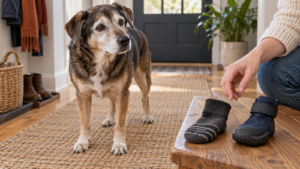

Small changes in an older dog are easy to explain away. A slower morning. A skipped meal. A little more sleeping. One odd accident in the house.
Some changes develop gradually with age, while others may be early signs of discomfort or disease. The American Veterinary Medical Association advises contacting a veterinarian about behavior or activity changes in senior pets rather than assuming age is the only cause. The safest middle ground is simple: write down what changed, when it started, and whether it is getting better, worse, or staying about the same.
This is a short pre-call observation list, not a daily health journal or a guide for deciding a diagnosis. This list is not meant to diagnose your dog. It is meant to help you notice patterns before they blur together.
Quick answer: what should you write down before calling the vet?
Before you call the vet about a senior dog, write down changes in appetite, water intake, bathroom habits, mobility, breathing, sleep, behavior, comfort, lumps or skin, and medication response. Add when each change started, how often it happens, and whether you can take a short photo or video.
If your dog seems very weak, is struggling to breathe, collapses, has repeated vomiting or diarrhea, appears painful, cannot urinate, has a seizure, or seems suddenly confused or distressed, call your veterinarian or an emergency clinic right away instead of waiting to track more notes.
1. Eating less, eating differently, or refusing favorite foods
Appetite changes can be subtle at first. Your dog may still eat, but slower. They may leave part of the meal, avoid hard treats, chew on one side, or act interested in food and then walk away.
Write down what changed from normal. Include the food, treats, table scraps, supplements, and any new chews. If your dog is on a prescription diet or has a medical condition, ask your vet before making diet changes on your own.
- What did your dog eat today?
- Did they skip a meal or eat less than usual?
- Are they dropping food, chewing oddly, or avoiding hard food?
- Did anything change in the food, treats, or feeding schedule?
2. Drinking more or less than usual
Water changes are easy to miss unless you refill the bowl at the same times each day. More drinking can matter. So can drinking less, especially if your dog is also not eating well, vomiting, having diarrhea, or acting tired.
You do not need a perfect measurement. A plain note is useful: “refilled water bowl twice before dinner” or “barely touched water all morning.” If you can estimate the amount, even better.
3. Bathroom changes
For senior dogs, bathroom notes can help your vet understand whether a change is occasional or becoming a pattern. Track accidents in the house, straining, diarrhea, constipation, changes in urine amount, and needing to go out more often.
It may feel awkward, but write down what you actually see. Color, frequency, urgency, and whether your dog seems uncomfortable can all help the clinic decide how soon your dog should be seen.
If your dog cannot urinate, seems painful while trying, has blood in urine or stool, has repeated diarrhea, or is vomiting along with bathroom changes, call the vet promptly.
4. Limping, stiffness, or trouble getting up
An older dog may be stiff after sleeping and loosen up after moving around. That does not mean you should ignore it. Your vet will want to know when it happens and how much it affects daily life.
Track whether the stiffness is worse in the morning, after walks, after stairs, or after a busy day. Note which leg seems affected if you can tell. A short video of your dog walking, standing up, or using stairs can be more useful than trying to describe it from memory.
- Is your dog slower to rise?
- Are they slipping on floors?
- Are they avoiding stairs, the couch, the car, or their usual walk?
- Do they improve after a few minutes of gentle movement?
5. Coughing, breathing changes, or tiring faster
Coughing once after drinking water is different from coughing every night. Panting after play is different from panting while resting in a cool room. The details matter.
Write down when the coughing or breathing change happens: during sleep, after exercise, after drinking, during excitement, or while resting. Also note whether your dog tires faster on normal walks.
Breathing trouble is not a wait-and-see symptom. The ASPCA identifies pale gums, rapid breathing, difficulty standing, loss of consciousness, and seizures as emergency warning signs. If your dog is working hard to breathe, collapses, or cannot settle, contact emergency veterinary care.
6. Sleep, confusion, anxiety, or behavior changes
Senior dogs can change in ways that do not look medical at first. They may pace at night, seem restless, stare at walls, get stuck in corners, bark more, seem clingier, or act unsure in familiar places. These overlap with signs Cornell describes for canine cognitive dysfunction, but pain, sensory loss, and other illnesses can produce similar changes, so a veterinary assessment matters.
Do not assume your dog is “just getting old” if the change is new or getting worse. Write down what happened, what time of day it happened, and whether anything helped. Your vet can talk with you about possible causes and next steps.
7. New lumps, skin changes, wounds, or signs of pain
When you pet or brush your senior dog, notice anything new: lumps, sore spots, hair loss, scabs, swelling, bad odor, or areas your dog suddenly does not want touched.
For lumps, write down where it is, about how big it is, when you first noticed it, and whether it seems to be changing. A photo with a coin or ruler nearby can help you compare size later. Do not squeeze, poke, or treat a lump at home without veterinary guidance.
How to make your notes useful for the vet
You do not need a long journal entry. A few clear lines are better than a scattered page of worry. Use this simple format:
- What changed: “Skipped breakfast and only ate half of dinner.”
- When it started: “First noticed Monday morning.”
- How often: “Three meals this week.”
- What else changed: “Drinking more water and asking to go out at night.”
- Photo or video: “Video of limping after getting up from bed.”
If your dog already has an appointment coming up, the related article What to Track Before Your Senior Dog’s Vet Visit walks through what to gather before you go.
When a simple tracker helps
A tracker is useful when you keep thinking, “I know something is different, but I cannot explain it clearly.” It gives you one place for appetite, water, bathroom notes, mobility, sleep, behavior, and medication observations.
That is the purpose of the Senior Dog Symptom Tracker in the Well Walked Dog senior care system. It does not tell you what is wrong. It helps you bring cleaner notes to the person who can help: your veterinarian.
You can also review the site’s Health & Training Disclaimer for the boundary we use on health and behavior topics.
A calm next step
Pick one thing that changed this week and write it down today. Keep it plain. If the change is new, worsening, painful, or worrying you, call your vet and ask what they recommend.
Editorial review and sources
Editorially reviewed and updated by the Well Walked Dog Editorial Team on July 16, 2026. The health and safety statements in this article were checked against the veterinary and animal-health sources below. This article provides general education and does not replace care from your veterinarian.