
Vet visits can feel rushed when you have a senior dog. You may walk in with a dozen small worries, answer a few questions, and then realize on the drive home that you forgot to mention the new limp, the extra water drinking, or the night your dog seemed confused in the hallway.
This article is an appointment-preparation guide. For day-to-day observations between visits, use the separate Senior Dog Symptom Tracker. That is why it helps to track a few simple things before the appointment. You do not need a complicated medical journal. You just need clear notes that help your veterinarian see what has changed, how often it is happening, and what your dog is like at home between visits.
This is especially useful for older dogs because small changes can matter. A senior dog may slow down for many reasons, and age alone does not tell you whether a change is harmless. The American Veterinary Medical Association recommends more frequent veterinary care for senior pets so problems can be found and addressed earlier. Good notes do not replace veterinary care, but they can make the appointment more useful.
If your senior dog is also adjusting to changes at home, such as a new puppy, it can help to read Will My Senior Dog and a New Puppy Get Along? alongside this checklist.
Start with the reason for the visit
Before the appointment, write down the main reason you scheduled it. Try to be specific. Instead of writing “acting weird,” write what you are actually seeing.
- “She hesitates before going up the porch steps.”
- “He wakes up twice at night and seems restless.”
- “She is eating breakfast more slowly than usual.”
- “He has had two accidents in the house this week.”
- “I found a new lump near his shoulder.”
If it is a wellness visit, write that too. A senior wellness exam is still a good time to ask about weight, bloodwork, teeth, mobility, diet, supplements, and what changes you should watch for at home.
Write down your top three concerns
Most appointments have limited time, so choose the three things you most want to discuss. This keeps the visit focused and helps you avoid leaving with your biggest concern unanswered.
Your top concerns might include:
- a new symptom
- a change in appetite or thirst
- mobility problems
- possible pain
- weight gain or weight loss
- bathroom accidents
- confusion or anxiety
- medication questions
- dental changes
- new lumps or bumps
Put the most important concern first. If you are worried something is urgent, call the vet before the appointment rather than waiting.
Track eating, drinking, and bathroom changes
Food, water, and bathroom habits give your vet useful clues. You do not need perfect measurements, but you should note any clear change from your dog’s normal routine.
For a few days before the visit, write down:
- whether your dog is eating less or more than usual
- whether meals take longer
- whether your dog drops food, chews on one side, or avoids hard treats
- whether water intake seems higher or lower
- whether urination is more frequent
- whether there have been accidents in the house
- whether stools are normal, loose, hard, or unusual
- whether vomiting has happened, and how often
Bring details if you have them. “Two loose stools on Saturday and one on Sunday” is more helpful than “stomach issues lately.”
Note mobility and comfort changes
Senior dogs often show discomfort in quiet ways. They may not cry or limp dramatically. Instead, they may avoid stairs, sleep more, lag behind on walks, or need extra time getting up.
Before the appointment, watch for:
- stiffness after resting
- limping or favoring one leg
- hesitation before jumping, climbing, or using stairs
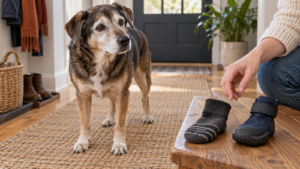
- slipping on hard floors
- shorter walks than usual
- panting or restlessness when lying down
- difficulty getting comfortable
- changes in posture
If you can safely record a short video of the movement you are worried about, ask your vet if it would be helpful. Some dogs move differently at the clinic because they are excited, nervous, or distracted.
List every medication, supplement, food, and treat
This is one of the easiest things to forget and one of the most useful things to bring. Write down everything your dog takes or eats regularly, even if it seems minor.
Include:
- prescription medications
- heartworm, flea, and tick prevention
- joint supplements
- calming products
- vitamins
- main food brand and formula
- daily amount of food
- treats, chews, toppers, and table food
- recent diet changes
For medications and supplements, include the dose and how often your dog gets it. If you are not sure, bring the bottle or take a photo of the label.
Write down behavior and sleep changes
Behavior changes in senior dogs are worth mentioning, especially when they are new. Some changes may be related to discomfort, sensory changes, anxiety, sleep disruption, or medical issues your vet should know about. Cornell lists disorientation, altered sleep, house-soiling, pacing, and anxiety among signs veterinarians consider when assessing canine cognitive dysfunction, while noting that other medical conditions can look similar.
Track things like:
- restlessness at night
- pacing
- confusion in familiar places
- new anxiety
- less interest in family interaction
- irritability
- clinginess
- sleeping much more than usual
- seeming startled more easily
Do not worry about using medical language. Plain descriptions are fine. Your job is to describe what you see at home.
Prepare smart questions for the vet
A good checklist is not just about symptoms. It also helps you ask better questions. Before the visit, choose the questions that fit your dog’s situation.
- Is my dog at a healthy weight?
- Should we consider senior bloodwork?
- Could this stiffness be related to pain?
- Are there dental issues we should address?
- Should my dog’s exercise routine change?
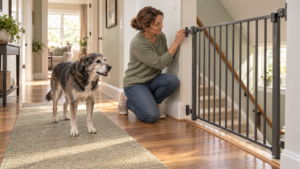
- Are ramps, rugs, or home changes worth considering?
- What symptoms should I track at home?
- When should I call urgently?
- What side effects should I watch for with this medication?
- When should we schedule the next checkup?
If your dog has several issues, ask which one matters most right now. That can help you leave with a clearer plan instead of a long list of worries.
Keep notes during and after the visit
Vet appointments can move quickly. Bring a notebook or printed page so you can write down the plan while it is fresh.
After the visit, record:
- diagnosis or findings
- tests recommended or completed
- medication changes
- home care instructions
- exercise or food changes
- warning signs to watch for
- follow-up date
- questions to ask next time
Keep these notes together by date. Over time, they create a helpful record of what changed, what helped, and what your vet recommended.
When not to wait for a scheduled appointment
A checklist is helpful for routine visits and non-urgent concerns, but some symptoms should not wait. Contact your veterinarian or an emergency clinic right away for a sudden or severe problem. The ASPCA lists pale gums, rapid breathing, difficulty standing, loss of consciousness, seizures, and excessive bleeding among signs that need emergency care. Repeated vomiting or diarrhea, severe pain, collapse, inability to urinate, or any rapidly worsening problem also warrants an immediate call to a veterinary professional.
For general emergency preparation, you may also want to review Dog First Aid Basics Every Owner Should Know. For preventive care context, Dog Vaccines: A Plain-English Guide for Owners can help you prepare better questions for routine visits.
When in doubt, call. It is better to ask early than to sit at home wondering if a serious symptom can wait.
A simple way to make senior dog visits easier
The goal is not to turn you into your dog’s doctor. The goal is to be a better observer and give your veterinarian clearer information.
Before your senior dog’s next appointment, write down the appointment reason, your top concerns, recent changes, medication and food details, and the questions you want answered. Bring those notes with you. You will feel more prepared, and your vet will have a better picture of what life looks like for your dog at home.
That is exactly why a printable senior dog vet visit checklist can be so useful. It gives you one place to gather the details that are easy to forget, especially when you are worried about an older dog you love.
Important note: This article is for organization and general education only. It is not veterinary advice and does not diagnose or treat medical conditions. Always contact your veterinarian with health concerns about your dog.
Editorial review and sources
Editorially reviewed and updated by the Well Walked Dog Editorial Team on July 16, 2026. The health and safety statements in this article were checked against the veterinary and animal-health sources below. This article provides general education and does not replace care from your veterinarian.