Bringing home a puppy when you already have a senior dog can work, but it needs more thought than “they’ll figure it out.” A puppy is noisy, busy, mouthy, and still learning basic manners. A senior dog may be patient, or they may be tired, sore, protective of space, or simply not interested in puppy chaos.
The real question is not whether senior dogs and puppies can get along. Many can. The better question is whether your senior dog can stay comfortable, safe, and respected while the puppy learns how to live in the home.
Start with your senior dog’s health and temperament
Before adding a puppy, look honestly at your older dog’s current life. Are they still playful and social, or do they prefer quiet routines? Do they have arthritis, vision changes, hearing loss, anxiety, pain, or trouble getting away from other dogs?
If your senior dog is painful, fragile, easily startled, or already stressed, talk with your vet before bringing home a puppy. Pain can make even a kind dog less tolerant, and a bouncy puppy can accidentally bump, climb on, or pester an older dog who cannot move away easily.
Do not expect the senior dog to raise the puppy
Older dogs can teach puppies some social lessons, but they should not be responsible for training, correcting, or entertaining the puppy all day. That job belongs to the humans in the home.
Your senior dog should not have to tolerate constant jumping, face licking, toy stealing, food bowl hovering, bed crashing, or rough play. Step in early. Waiting until the senior dog snaps is not fair to either dog.
Set up separation before the puppy arrives
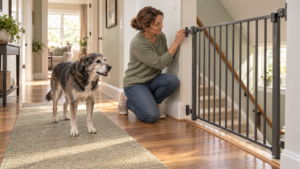
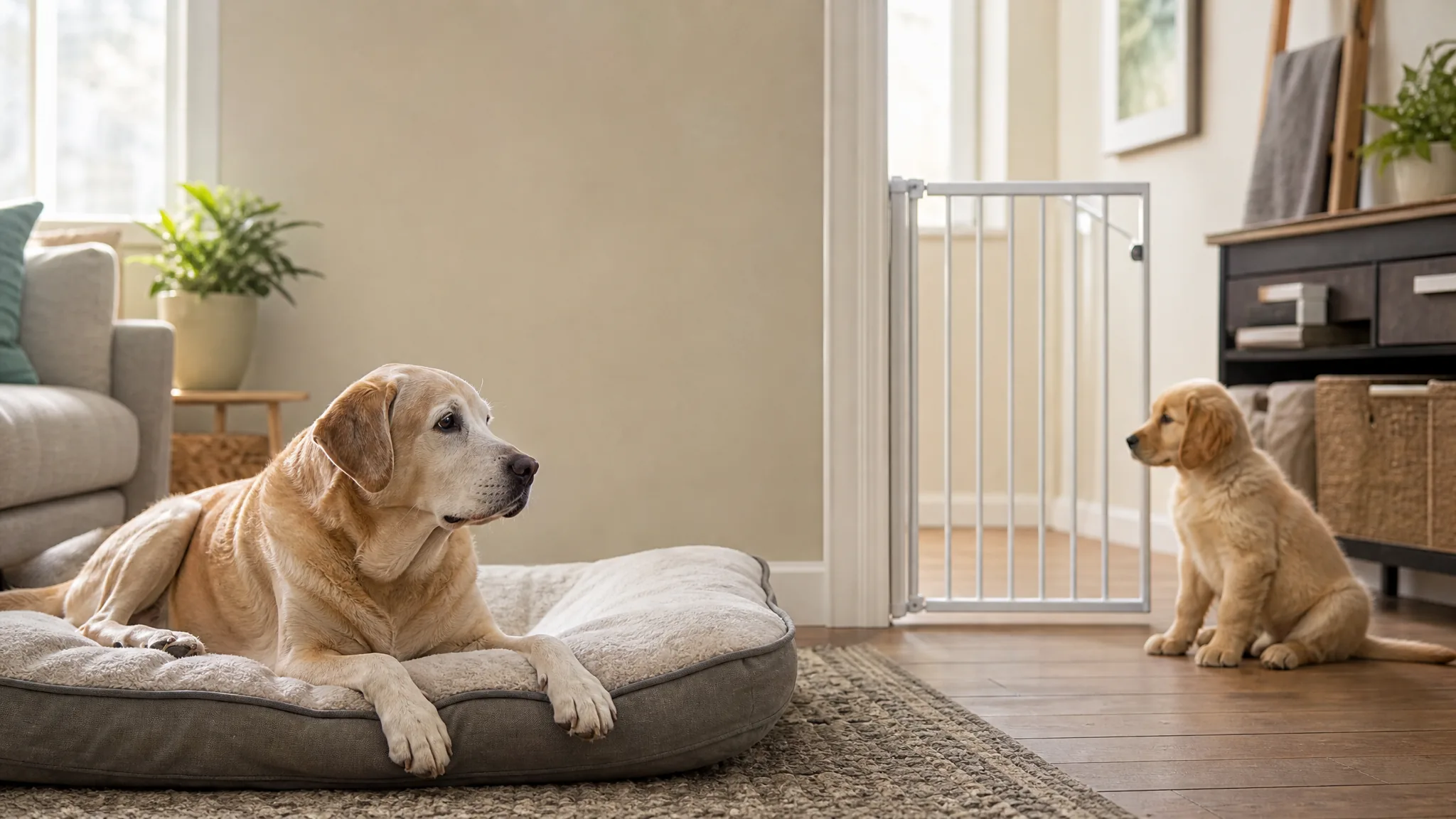
The best puppy introductions usually start with good home setup. Use baby gates, crates, pens, closed doors, or separate rooms so both dogs can rest without constant access to each other.
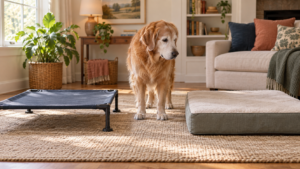
Make sure your senior dog has protected spaces where the puppy is not allowed. That may include a bed, favorite room, feeding area, or quiet corner. The puppy also needs their own safe place for naps, chewing, meals, and downtime.
If you are still gathering supplies, use the new puppy checklist before the puppy comes home.
Keep the first meeting simple
The first meeting should be calm and short. If possible, have two adults present so each dog has a handler. Avoid crowding them in a tight hallway, doorway, or small room where the senior dog cannot move away.
Let them notice each other without forcing nose-to-nose contact. Keep leashes loose if you are using them. Praise calm behavior. End the interaction while things are still going well instead of waiting for one dog to get overwhelmed.
Some sniffing, moving away, or mild correction from the older dog can be normal. Stiff body language, hard staring, repeated growling, lunging, hiding, panic, or the puppy ignoring every warning sign means you need more space and slower steps.
Supervise more than you think you need to
Do not leave a new puppy and senior dog together unsupervised just because the first meeting went well. Puppies change moods quickly. They get tired, wild, hungry, mouthy, and overstimulated. Senior dogs can also reach their limit suddenly.
Use managed together time at first. Short sessions, calm activities, and frequent breaks are better than letting the puppy follow the older dog around all evening.
Protect food, toys, beds, and attention
Many problems start around resources. Feed the dogs separately. Pick up high-value chews when they are together. Do not let the puppy climb into the senior dog’s bed or steal toys from their mouth.
Also protect attention. Your older dog should still get calm time with you, walks that fit their body, and routines that existed before the puppy arrived. A new puppy is exciting, but your senior dog should not feel pushed aside.
For puppy feeding basics, read Do’s and Don’ts of Feeding Your Puppy.
Teach the puppy calm habits early
The puppy does not need to learn everything at once, but a few early habits can make life much easier for your senior dog:
- settling in a crate, pen, or bed
- coming when called away from the older dog
- trading toys instead of stealing
- short training sessions before wild energy builds
- gentle handling and quiet time after meals or play
For broader manners work, use 10 Practical Dog Training Tips for Everyday Manners.
Watch the senior dog’s body language
Senior dogs do not always make a big scene when they are uncomfortable. Some quietly leave. Some freeze. Some lick their lips, turn their head away, tuck their tail, hide behind furniture, or stop using spaces they used to enjoy.
Do not wait for growling or snapping before you help. If your senior dog is avoiding the puppy, sleeping more, guarding spaces, moving stiffly, eating less, or seeming less like themselves, slow the introductions down and check whether pain or stress may be part of the problem.
Know when to get help
Get professional help if either dog seems unsafe, intensely fearful, or unable to relax. Warning signs include repeated fights, bites, hard guarding, the puppy harassing the senior dog nonstop, the senior dog hiding constantly, or any interaction that makes you afraid to manage them.
Your vet can check for pain or health issues in the senior dog. A qualified trainer or behavior professional can help you set up safer introductions and routines.
A simple home setup checklist
- Separate feeding spots for both dogs
- Baby gates, crate, pen, or doors for managed separation
- Protected senior-dog rest area
- Puppy nap and chew area
- Short supervised introduction sessions
- Separate high-value chews and toys
- Daily one-on-one time with the senior dog
- Vet or trainer support if stress or safety concerns show up
So, will they get along?
Maybe. A senior dog and a puppy can become comfortable housemates, and sometimes they become close friends. But the puppy’s arrival should not come at the older dog’s expense.
If you protect the senior dog’s space, manage the puppy’s energy, supervise carefully, and move at the pace of the more sensitive dog, you give both dogs a much better chance.
If you are still deciding whether now is the right time, start with I’m Getting a Puppy: What to Do First before you commit.
Set up protected space before the puppy arrives
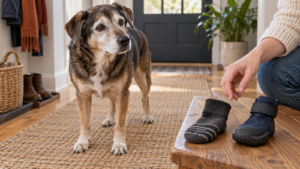
Gates, traction paths, and a bed the puppy cannot take over can make management easier without forcing the dogs to interact. Use the Senior Dog Home Safety guide for barriers and footing, and the Beds & Rest guide when your older dog needs an easier, quieter place to settle.