Once you decide to get a puppy, it is easy to jump straight into beds, toys, names, and cute photos. Those parts are fun, but the first priority is simpler: make the home safe, choose a veterinarian, set up a basic routine, and decide how the first week will work.
You do not need to have everything figured out before your puppy arrives. You do need a practical plan for safety, sleep, potty breaks, food, and the first few training habits.
1. Confirm the timing and pickup details
Before buying more supplies, confirm the basics with the breeder, rescue, shelter, or current caregiver. Ask when the puppy can come home, what food they are eating, what vet care they have already had, and what paperwork will come with them.
Ask about vaccines, deworming, microchip status, medications, and any health notes. If the puppy is coming from a foster home, ask what routine they already know. Small details like meal times, sleeping setup, and potty habits can make the transition easier.
2. Schedule the first vet visit
Choose a veterinarian before your puppy comes home if you can. Schedule a first visit soon after pickup, especially if the adoption contract or breeder paperwork requires one within a certain number of days.
At that visit, ask about vaccines, parasite prevention, food, safe socialization, spay or neuter timing, microchipping, and any breed or size-specific concerns. Bring any records you received so your vet can help you plan the next steps.
3. Puppy-proof one area first
You do not have to puppy-proof the entire house on day one. Start with the area where your puppy will spend the most supervised time. For many homes, that means a kitchen, living room section, laundry room, or pen area.
- Move cords, shoes, cleaning products, medications, plants, and small objects out of reach.
- Secure trash cans and food storage.
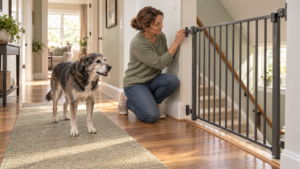
- Use baby gates or a puppy pen to limit access.
- Put away anything you would be upset to see chewed.
- Check low shelves, bags, and kids’ toys from puppy height.
A smaller safe area helps with supervision and potty training. It also gives your puppy fewer chances to practice chewing, stealing, or disappearing into another room.
4. Buy the first supplies, not every supply
Start with the basics: food, bowls, collar or harness, leash, ID tag, crate or sleeping area, cleanup supplies, chew toys, and a safe way to manage space. You can add extras later once you know your puppy’s size, chewing style, coat, and routine.
If you want a fuller supplies list, use the New Puppy Checklist. It covers what is useful without turning puppy prep into a shopping spree.
5. Keep food changes slow
Ask what food the puppy is already eating and start with that unless your veterinarian tells you otherwise. A sudden food change can upset a puppy’s stomach, especially during an already stressful transition.
If you plan to switch foods, ask your vet how to transition gradually. Keep treats simple at first too. Training rewards should be small and easy on the stomach.
6. Plan the first-night sleeping setup
The first night may be noisy. Your puppy has just left a familiar place and may cry, move around, or need a potty break. Decide where the puppy will sleep before bedtime arrives.
Many puppies do best with a crate, pen, or small safe area near the people in the home at first. Keep the setup boring and calm: a safe bed or blanket, access to water if appropriate for your plan, and no loose items that could be chewed or swallowed.
7. Set a simple potty routine
Puppies need frequent potty breaks. Take your puppy out after waking, after eating, after playing, after naps, and before bedtime. Reward right after they go in the right place so the lesson is clear.
Accidents will happen. Clean them well, adjust the schedule, and supervise more closely. Punishing a puppy after an accident usually creates confusion and can make them hide when they need to go.
8. Start training with tiny wins
Training can start right away, but keep it short and positive. Reward your puppy for looking at you, following you, sitting, settling, coming when called, and letting you handle their collar or harness gently.
Think in one- to three-minute sessions. Puppies have short attention spans, and daily life gives you plenty of chances to practice. For a broader training foundation, read 10 Practical Dog Training Tips for Everyday Manners.
9. Socialize safely, not randomly
Socialization is not just meeting as many dogs and people as possible. It means helping your puppy have safe, calm, positive experiences with the world: surfaces, sounds, handling, car rides, people, everyday objects, and appropriate dog interactions.
Because puppies are still building vaccine protection, ask your veterinarian what is safe in your area. Avoid risky dog-heavy places until your vet says they are appropriate. You can still socialize with controlled experiences, clean environments, trusted healthy dogs, and observation from a safe distance.
10. Make week one quiet and predictable
It is tempting to invite everyone over right away. Give your puppy time to settle first. Keep the first week focused on sleep, meals, potty breaks, gentle play, handling, and learning the household rhythm.
Short walks or outdoor time can become part of the routine when your veterinarian says it is safe. As your puppy grows, a simple daily walk routine can help turn exercise into calm practice instead of chaos.
Quick first-week puppy checklist
- Confirm pickup details, food, records, and health notes.
- Schedule the first vet visit.
- Puppy-proof one main area.
- Buy basic supplies before extras.
- Plan sleeping, potty breaks, meals, and quiet time.
- Start with short, positive training moments.
- Ask your vet about safe socialization.
Getting a puppy is a big adjustment, but the first step does not need to be complicated. Make the home safe, get the right support lined up, keep routines simple, and build from there.