Dog training is easier to stick with when it feels like part of normal life, not a separate project that only happens when you have extra time. The best results usually come from small, consistent habits repeated in ordinary moments: at the door, on walks, before meals, when guests arrive, and when your dog is excited or distracted.
These tips are built for everyday manners. They are not a replacement for a qualified trainer, veterinarian, or veterinary behavior professional when a dog is fearful, aggressive, unsafe, or deeply anxious. But they can help many owners make training clearer and more realistic.
1. Decide what you want your dog to do instead
“Stop jumping,” “don’t pull,” and “quit barking” are common goals, but they do not tell your dog what behavior should replace the problem. Training works better when you choose a specific alternative.
- Instead of jumping, teach four paws on the floor or sitting to greet.
- Instead of pulling, reward walking near you with a loose leash.
- Instead of rushing the door, teach waiting on a mat or behind a boundary.
The clearer the replacement behavior is, the easier it is to practice and reward.
2. Reward the behavior you want to see again
Dogs repeat behaviors that work for them. If sitting politely earns attention, treats, play, or access to something they want, sitting becomes more useful. If pulling gets them to the exciting smell faster, pulling becomes more useful.
Rewards do not always have to be food, but food is often the easiest way to teach something new. Praise, toys, sniffing, movement, and permission to greet can also be rewards when used at the right time.
3. Keep training sessions short
Most dogs learn better from a few short sessions than from one long session that turns frustrating. Try two to five minutes at a time, especially when teaching something new.
End while your dog is still engaged. A clean, easy repetition at the end is better than pushing until your dog is tired, distracted, or confused.
4. Practice in easy places before hard places
A dog who can sit in the kitchen may not be ready to sit beside a busy sidewalk, dog park fence, or front door with guests arriving. That does not mean your dog is stubborn. It means the setting got harder.
Build the skill in layers. Start at home, then try the yard, then a quiet street, then a mildly distracting place. Add distance, noise, people, dogs, and movement slowly.
5. Be consistent with cues and rules
Dogs learn faster when the rules are predictable. If “down” means lie down one day and get off the couch the next day, the cue gets muddy. If jumping is allowed with one person but punished with another, greeting manners become confusing.
Pick simple cue words and use them the same way. If several people live with the dog, agree on the basics: greeting rules, feeding routines, leash habits, furniture rules, and what behaviors get rewarded.
6. Make walks part of training
Walks are not just exercise. They are daily practice for attention, leash manners, passing distractions, waiting at curbs, and calming down after excitement.
If your dog pulls, start with small wins. Reward a few steps near you. Change direction before the leash gets tight. Stop when pulling starts, then move again when the leash softens. For more help, read Loose Leash Walking: Simple Fixes for Dogs That Pull.
You can also build training into a calmer routine with How to Build a Better Daily Walk Routine for Your Dog.
7. Manage the environment while your dog learns
Management is not cheating. It prevents your dog from practicing unwanted behavior while you teach something better.
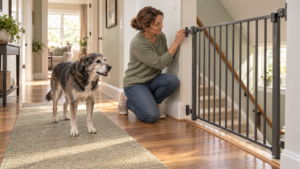
- Use a baby gate before guests arrive.
- Put shoes, food, trash, and kids’ toys out of reach.
- Use a leash or long line in unfenced areas.
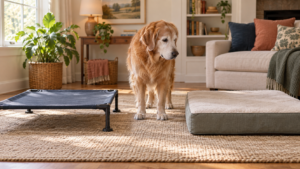
- Give your dog a quiet place to rest when the house is busy.
The goal is not to manage forever. The goal is to make good choices easier while training catches up.
8. Choose classes or trainers carefully
Group classes can be useful for puppies, beginner manners, and practicing around mild distractions. Private sessions may be better for specific behavior problems, nervous dogs, reactive dogs, or owners who need a plan built around their home routine.
Before choosing a trainer, ask how they handle mistakes, fear, barking, pulling, and dogs who struggle in class. Look for clear communication, humane methods, realistic expectations, and a willingness to refer to a veterinarian or veterinary behavior professional when needed.
9. Do not wait on serious behavior problems
Some issues need professional support sooner rather than later. Get qualified help if your dog is growling, biting, lunging, guarding food or objects, panicking when left alone, shutting down, or showing behavior that feels unsafe.
Early help can prevent problems from becoming more stressful for everyone. It can also rule out pain, illness, or fear as part of the behavior.
10. Keep expectations realistic
Training is not a straight line. Dogs have good days, distracted days, tired days, and days when the environment is simply too hard. Progress often looks like shorter recovery time, fewer mistakes, better choices in easier settings, and more confidence over time.
If you are bringing home a new puppy, start with simple routines, safe setup, and short practice. The New Puppy Checklist can help with the basics before training gets more complicated.
The goal is not flawless behavior in every situation. The goal is clearer communication, safer habits, and a dog who understands what works in everyday life.