Quick note: This article is general education for dog owners. It is not a vaccine schedule or a substitute for veterinary care. Your veterinarian should help you decide which vaccines your dog needs, when they are due, and how local rabies rules apply where you live.
Dog vaccines can feel confusing at first because there is not one perfect schedule for every dog. A puppy, a senior dog, a city dog, a boarding dog, and a dog who hikes in tick-heavy areas may all need slightly different protection.
The good news is that you do not need to memorize every vaccine name. You mainly need to understand the difference between basic protection and lifestyle-based protection, keep good records, and ask your vet the right questions.
What dog vaccines are meant to do
Vaccines help your dog’s immune system prepare for serious diseases before exposure happens. They do not make a dog impossible to infect, and they do not replace everyday care, but they can reduce the risk of severe illness from diseases that can spread quickly or become life threatening.
They also matter for real life. Groomers, boarding facilities, dog daycares, training classes, apartments, airlines, and travel services may ask for proof that your dog is current on certain vaccines.
Core vaccines versus lifestyle vaccines
You will often hear vaccines described as core or non-core. A better plain-English way to think about it is this:
- Core vaccines protect against serious diseases that most dogs are expected to be protected from.
- Lifestyle vaccines depend on where your dog lives, where they go, and what risks they are likely to meet.
Common core protection usually includes rabies and a combination vaccine that covers diseases such as distemper, adenovirus, and parvovirus. Your vet may call that combination DHPP, DAPP, or something similar.
Lifestyle vaccines may include things like Bordetella, leptospirosis, Lyme disease, or canine influenza. Whether those make sense depends on your dog’s routine. A dog who goes to daycare every week has different exposure than a dog who mostly stays home. A dog who walks near wildlife or standing water may have different risks than a dog who mostly uses a small fenced yard.
Why puppies need a vaccine series
Puppies usually need several vaccine visits, not because anyone is trying to make life complicated, but because their immune protection is still developing. Puppies may still have some protection from their mother early on, and that can interfere with how well a vaccine works. A series gives the puppy a better chance of being protected as that early protection fades.
This is why your vet may tell you to be careful about dog parks, pet store floors, shared grass areas, and unknown dogs until your puppy has had the right vaccines for their age. The exact timing belongs in a conversation with your vet, especially if your puppy came from a shelter, breeder, rescue, or unknown background.
If you are getting ready for a puppy, pair this with I’m Getting a Puppy: What to Do First and the new puppy checklist.
Adult boosters are not all the same
Adult dogs still need vaccine planning, but not every vaccine is handled the same way. Some boosters may be due yearly. Others may last longer, depending on the vaccine, your dog’s history, local laws, and your veterinarian’s recommendation.
Rabies is the one owners should be especially careful about because it is tied to law, travel, boarding, licensing, and public health. Do not guess on rabies timing. Ask your vet what is required where you live and keep a copy of the certificate somewhere easy to find.
Questions to ask your vet
The best vaccine plan starts with your dog’s actual life, not a random chart online. At your next visit, ask:
- Which vaccines are required by law where we live?
- Which vaccines are core for my dog?
- Which lifestyle vaccines make sense for our routine?
- Does my dog’s age, health history, or medication affect the plan?
- When is the next booster due?
- What records should I keep for grooming, boarding, daycare, or travel?
If your dog has had a past vaccine reaction, tell your vet before any shots are given. That does not automatically mean your dog can never be vaccinated again, but your vet needs to know so they can make a safer plan.
Keep vaccine records organized
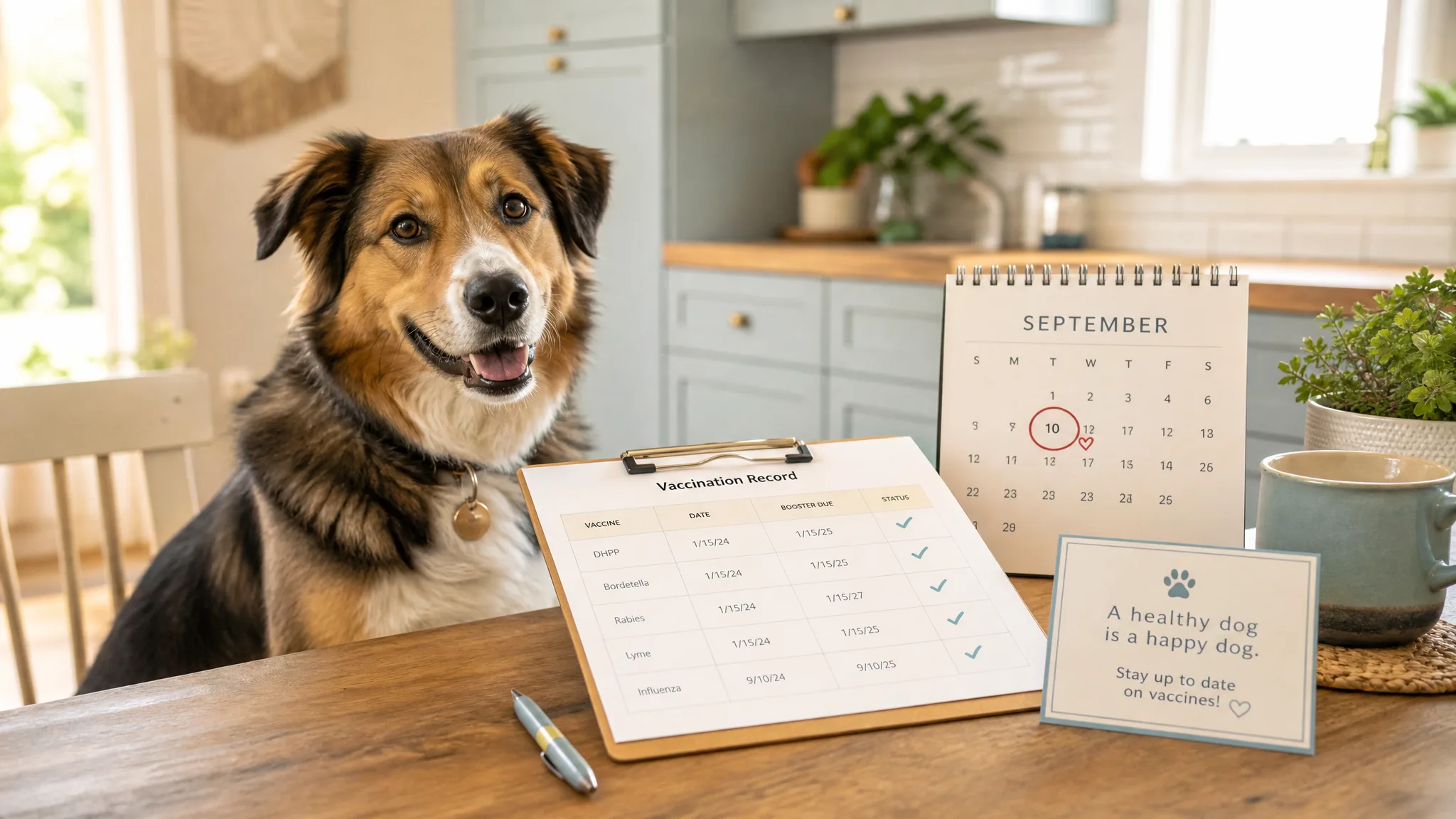
Vaccine records are easy to ignore until you suddenly need them. Keep a digital copy and a printed copy of your dog’s current records. If your dog travels, boards, goes to daycare, sees a groomer, or attends classes, keep the records with your other dog paperwork.
A simple folder can include:
- rabies certificate
- latest vaccine summary from your vet
- microchip number
- current medications
- emergency clinic information
- notes about past reactions or health conditions
This also connects naturally with emergency prep. The dog first-aid basics guide covers the phone numbers and supplies worth keeping together.
Think about vaccines before travel or boarding
Do not wait until the week before a trip to check vaccine records. Boarding facilities, airlines, hotels, daycares, and groomers may have their own requirements, and some vaccines may need time before they are considered current.
If you are planning a trip, check requirements early and ask your vet whether your dog needs any location-specific protection. The dog travel packing checklist is a good companion piece for getting the practical items together.
A simple way to think about it
You do not need to become an expert in vaccine medicine. You need a vet-guided plan, current records, and a habit of checking requirements before grooming, boarding, training, daycare, or travel.
For most owners, that is the practical goal: protect your dog from serious preventable disease, stay current on legal requirements, and avoid last-minute surprises when someone asks for proof.