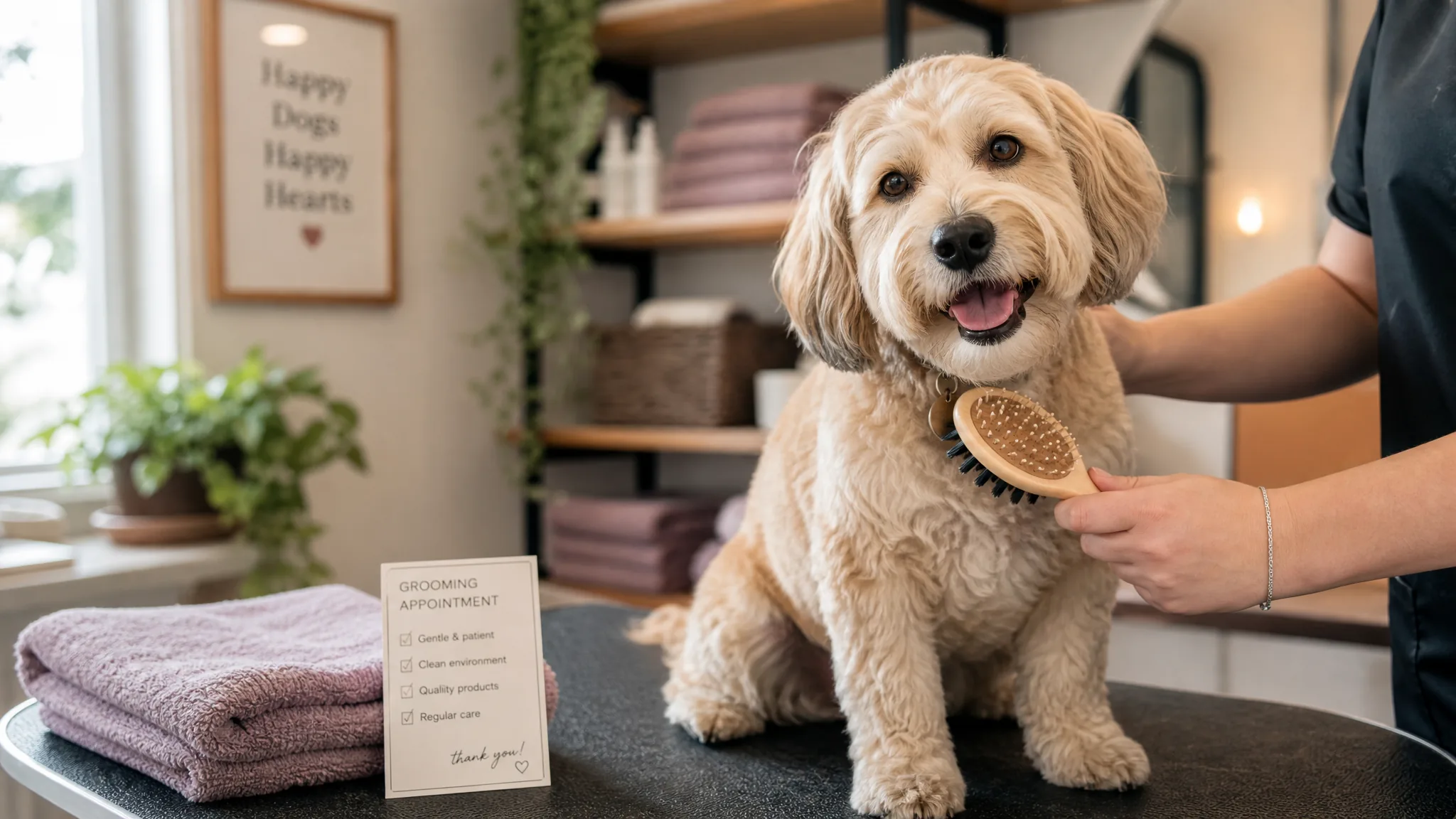
A good dog groomer does more than make your dog look tidy. The right groomer handles your dog safely, communicates clearly, notices problems early, and makes routine care less stressful over time.
That matters whether your dog needs a full haircut every few weeks or just help with nails, baths, brushing, ears, or coat maintenance. Grooming is still hands-on care, and your dog deserves someone patient, careful, and honest.
1. Start with your dog’s actual needs
Before you look for a groomer, think about what your dog really needs. A doodle with a coat that mats easily has different needs than a short-haired dog who mainly needs nail trims. A nervous rescue dog may need a slower first visit. A senior dog may need shorter appointments and gentler handling.
Write down your dog’s age, coat type, behavior concerns, health notes, and what services you want. This makes the first conversation more useful and helps the groomer tell you whether they are a good fit.
2. Ask other dog owners, but filter the advice
Recommendations from neighbors, your vet, your trainer, or local dog owners can be helpful. Still, a groomer who is perfect for one dog may not be right for yours.
When someone recommends a groomer, ask why they like them. Are they gentle with nervous dogs? Good with double coats? Reliable with appointments? Careful with senior dogs? Clear about pricing? The reason behind the recommendation matters more than the name alone.
3. Look for cleanliness and calm systems
A grooming space does not need to look fancy, but it should feel clean, organized, and managed. Dogs should not be loose in chaotic areas. Tools should be kept safely. Staff should be able to explain how dogs are checked in, held, dried, and returned to owners.
If the lobby or mobile setup feels rushed, overcrowded, dirty, or confusing, pay attention. Grooming already involves noise, handling, water, dryers, and unfamiliar people. A calm system helps dogs cope better.
4. Ask how they handle nervous or wiggly dogs
This question tells you a lot. A thoughtful groomer should be able to describe how they slow down, take breaks, adjust the service, use safe handling, or recommend shorter starter appointments when needed.
Be honest about your dog. If your dog hates nail trims, barks at dryers, snaps when touched, or panics away from you, say that before booking. Surprising the groomer does not help your dog. It can make the appointment riskier for everyone.
5. Ask about training, experience, and safety practices
Dog grooming is skilled work. Ask how long the groomer has been grooming, what types of dogs they usually handle, and whether they have taken safety, handling, breed coat, first-aid, or low-stress grooming education.
One specific certificate is not the only way to be a good groomer, but ongoing education is a good sign. It shows they take the work seriously and are not relying only on speed or style.
6. Be clear about vaccines and records
Many grooming businesses ask for current vaccine records, especially rabies. Some may have additional requirements depending on their setup and local rules.
Ask what records they need before the appointment so you are not scrambling at drop-off. If you need a refresher on what those records mean, read Dog Vaccines: A Plain-English Guide for Owners.
7. Understand the price before booking
Grooming prices can vary by coat type, size, condition, behavior, location, and the service requested. A badly matted coat, extra brushing, difficult nail trim, or special handling may cost more than a basic bath.
Ask what is included, what could change the price, and whether they will call before doing anything that costs extra. Clear pricing does not always mean cheap pricing. It means fewer surprises.
8. Watch how they communicate
A good groomer should be willing to answer reasonable questions. They should also be comfortable telling you when something is not a good idea, such as trying to brush out severe matting that would hurt the dog.
Look for calm, direct communication. You want someone who will tell you if they find a skin issue, ear concern, painful spot, fleas, ticks, mats, cracked nails, or behavior change. Groomers are not veterinarians, but they often notice things owners miss.
9. Prepare your dog for the first appointment
The first appointment should not be a surprise marathon if your dog is new to grooming. Ask whether a bath-only visit, meet-and-greet, nail trim, or shorter intro appointment makes sense.
At home, practice gentle handling in short sessions. Touch paws, ears, collar, tail area, and legs while rewarding calm behavior. Keep it easy. The goal is to make normal handling less strange before a groomer has to do it with clippers, water, dryers, or scissors nearby.
If you are starting with a young dog, the getting a puppy guide and new puppy checklist can help you think through early care routines.
10. Know the red flags
Keep looking if a groomer dismisses safety questions, refuses to explain basic handling, pressures you into services you do not understand, mocks nervous dogs, or acts annoyed when you mention health or behavior concerns.
Also be cautious if the setup seems overcrowded, dogs appear unattended in unsafe ways, the business cannot explain vaccine or emergency procedures, or communication feels rushed before you have even booked.
If your dog comes home with an injury, severe distress, or a sudden health concern, contact your veterinarian. For general emergency prep, keep the dog first-aid basics guide handy.
The right groomer should feel like part of your care team
The perfect groomer is not just the person with the best photos online. It is the person who fits your dog’s needs, communicates clearly, handles dogs safely, and helps routine care feel manageable.
When you find that person, grooming becomes less of a stressful errand and more of a normal part of keeping your dog comfortable, clean, and cared for.
When part of the grooming happens at home
A groomer can handle jobs that require training, equipment, or an extra set of hands. Between appointments, stable footing and short, low-stress sessions matter more than owning every tool. The Senior Dog Grooming & Clean Home guide separates tools used on the dog from tools used to clean the home and explains where each option is limited.