Quick note: This article is general education for puppy owners. It is not a medical nutrition plan. Your veterinarian should guide food choice, portion changes, weight concerns, digestive problems, allergies, and any special feeding needs.
Feeding a puppy sounds simple until you bring one home and realize there are a lot of small decisions: what food to use, how much to give, how often to feed, what treats are okay, and whether every soft stool is a crisis.
The goal is not to make feeding complicated. The goal is to build a steady routine that supports growth, keeps your puppy’s stomach as settled as possible, and helps you notice when something needs a vet’s input.
Do choose food made for puppies
Puppies are growing quickly, so they usually need food made for growth, not adult maintenance. Look for a complete and balanced puppy food that fits your puppy’s size and your veterinarian’s advice.
This matters even more for large-breed puppies. Their growth needs careful support, and the wrong balance can create problems. If you have a large-breed puppy or a breed expected to grow quickly, ask your vet which type of puppy food makes sense.
Don’t change food suddenly unless your vet tells you to
A sudden food change can upset a puppy’s stomach. If your puppy came home eating one food and you want to switch, ask your vet if the timing is right, then make the change gradually when possible.
A common approach is to mix a little of the new food with the old food, then slowly increase the new food over several days. Some puppies need more time. If your puppy develops vomiting, diarrhea, poor appetite, or seems unwell, call your vet instead of pushing through the change.
Do measure meals
Guessing portions can lead to overfeeding or underfeeding, especially when puppies are growing fast. Use a real measuring cup or kitchen scale and keep notes when you adjust the amount.
The feeding guide on the bag is a starting point, not a perfect rule for every puppy. Your puppy’s age, expected adult size, activity, body condition, treats, and health all matter. Your vet can help you adjust as your puppy grows.
Don’t let treats quietly become half the diet
Treats are useful for training, but they add up fast. Tiny training treats are usually better than large biscuits during puppy training because you can reward more often without overdoing it.
If you are doing a lot of training, set aside a small portion of your puppy’s regular food to use as rewards. That keeps the day more balanced and makes it easier to avoid too many extras.
Do build a predictable feeding routine
A routine helps with house training, energy, naps, and digestion. Most young puppies do better with scheduled meals instead of a constantly full bowl, but the number of meals depends on age, size, health, and your vet’s guidance.
Keep meals in the same general window each day. Offer a calm feeding spot. Pick up the bowl after a reasonable amount of time if your vet has not told you to free-feed. Then plan a potty break after meals because many puppies need to go soon after eating.
If you are still setting up puppy life, pair this with I’m Getting a Puppy: What to Do First and the new puppy checklist.
Don’t feed from the table as a habit
Giving a bite from your plate once may seem harmless, but puppies learn patterns quickly. If table food becomes normal, you may end up with begging, stomach upset, picky eating, or accidental exposure to foods that are unsafe for dogs.
Keep human food out of reach and make sure family members follow the same rule. If you want to give safe extras, ask your vet what is appropriate and keep portions small.
Do know which foods are unsafe
Some common foods and ingredients can be dangerous for dogs. Examples include chocolate, xylitol, grapes, raisins, alcohol, onions, garlic, macadamia nuts, and some high-fat foods. Human medications are another major risk.
If your puppy may have eaten something unsafe, call your veterinarian, an emergency clinic, or a pet poison hotline. Do not wait for symptoms and do not try to make your puppy vomit unless a professional tells you to. The dog first-aid basics guide has emergency contact reminders worth saving.
Don’t ignore repeated stomach problems
Puppies can have soft stools from stress, food changes, treats, parasites, infections, or eating things they should not. One mild stomach wobble is different from repeated diarrhea, vomiting, blood, weakness, poor appetite, or a puppy who seems painful or dull.
Call your vet if symptoms continue, seem severe, or come with behavior changes. Young puppies can become dehydrated faster than adult dogs, so it is better to ask early.
Do bring feeding questions to vet visits
Puppy vet visits are a good time to check whether your feeding routine still makes sense. Your puppy’s needs will change as they grow, and the right amount at one age may not be right a month later.
Ask your vet:
- Is this food right for my puppy’s size and age?
- How many meals per day should we use right now?
- Is my puppy’s weight and body condition on track?
- How should I adjust portions as my puppy grows?
- Are there treats or chews I should avoid?
- When should we switch from puppy food to adult food?
If you are organizing early puppy care, the dog vaccines guide can help you keep health records and vet questions together.
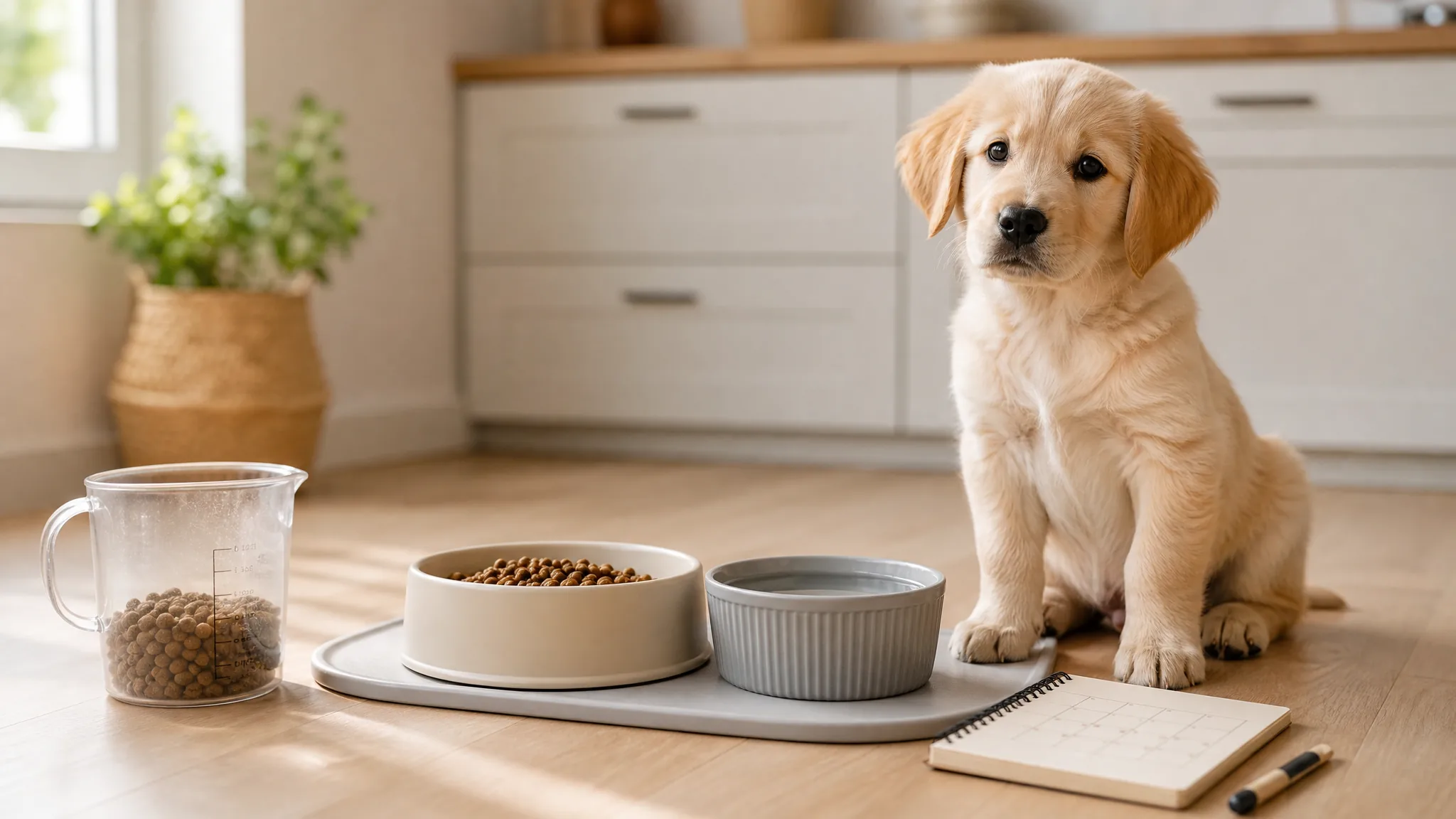
A simple puppy feeding setup
- puppy food recommended by your vet or appropriate for growth
- measuring cup or kitchen scale
- clean food and water bowls
- small training treats or part of the regular meal for rewards
- notes on meal times, portion changes, and stomach issues
- a list of unsafe foods posted where family members can see it
You do not need a complicated system. You need a steady routine, measured meals, safe habits, and a willingness to ask your vet when something feels off.