Most dog owners know their dog needs walks. The harder question is what a good walk should actually look like.
Some dogs pull from the first step. Some stop to sniff every blade of grass. Some bark when they see another dog across the street. Some come home from a long walk and still bounce off the walls. If that sounds familiar, you are not failing. You may just need a better routine.
A good daily walk gives your dog movement, sniffing time, structure, and practice staying calm around the real world. It also gives you a simple way to notice what your dog needs. More exercise is not always the answer. Sometimes the answer is more sniffing, a quieter route, shorter training moments, or a calmer start before you even leave the house.
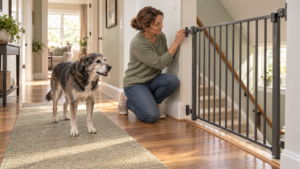
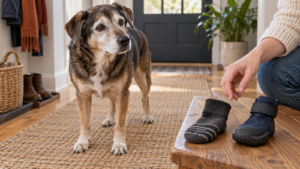
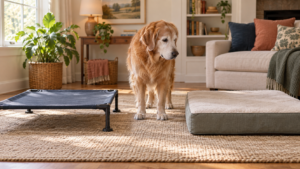
This guide is a practical starting point for building a better dog walking routine. If pulling is the main problem, continue with our loose-leash walking guide. If an older dog is slipping, tiring quickly, or struggling to rise before a walk, use the Senior Dog Mobility & Support guide to check fit, footing, and support options.
What Makes a Dog Walk “Good”?
A good dog walk is not measured only by distance. A two-mile march with constant pulling may leave both of you frustrated. A twenty-minute walk with steady movement, sniff breaks, and a few calm check-ins can do more good.
For most dogs, a good walk includes four things:
- Enough movement to stretch their body and burn some energy.
- Enough sniffing to let their brain work.
- Enough structure that they are not dragging you around.
- Enough safety and predictability that they do not feel overwhelmed.
That mix changes from dog to dog. A young Labrador may need a longer route and more practice with impulse control. A senior dog may need a slow walk with extra time to sniff. A nervous rescue dog may do best on quiet streets before trying busier areas. The routine should fit the dog in front of you.
Step 1: Decide the Purpose of Today’s Walk
One mistake people make is expecting every walk to do everything. Potty break, exercise, training, social exposure, leash manners, enrichment, all packed into one trip around the block. That is a lot to ask from a dog, especially one that is young, excitable, anxious, or under-trained.
Before you clip the leash, decide what kind of walk this is going to be.
- A potty walk should be short, familiar, and low pressure.
- An exercise walk should keep a steady pace and give your dog room to move.
- A sniff walk should be slower and focused on letting your dog investigate safe smells.
- A training walk should be short enough that your dog can stay engaged.
You can mix these, but it helps to know the main goal. If your dog needs a bathroom break, do not spend the first ten minutes drilling leash skills. If your dog needs a calmer brain, do not rush them past every sniffing spot. If you want to practice loose leash walking, pick a route with fewer distractions.
Step 2: Start Calmly Before You Leave
A chaotic walk often starts inside the house. The leash comes out, the dog jumps, the owner hurries, the door opens, and the dog launches into the world already overexcited.
You do not need a strict routine. You need a repeatable one. Get your bags, treats, keys, and leash ready first. Ask your dog for a simple sit or a moment of stillness before clipping the leash. Pause at the door. Step outside when your dog gives you even a second of calm.
This is not about demanding perfect obedience. It is about teaching your dog that calm behavior makes the walk begin. Done consistently, this small habit can change the first five minutes of the walk.
Step 3: Build in Sniff Breaks
Dogs read the world through scent. A tree, mailbox, fence post, or patch of grass can tell your dog who passed by, how recently, and sometimes whether the neighborhood cat has been making bold choices again.
Sniffing is not wasted time. It is mental exercise. Some dogs come home calmer from a slow sniff walk than from a fast walk where they never get to investigate anything.
A simple pattern works well: walk, sniff, walk. Move together for a few minutes, then give your dog a clear sniff break in a safe spot. After a short time, invite them forward again. This gives your dog freedom without letting the entire walk turn into a negotiation at every mailbox.
Step 4: Practice Loose Leash Walking in Small Pieces
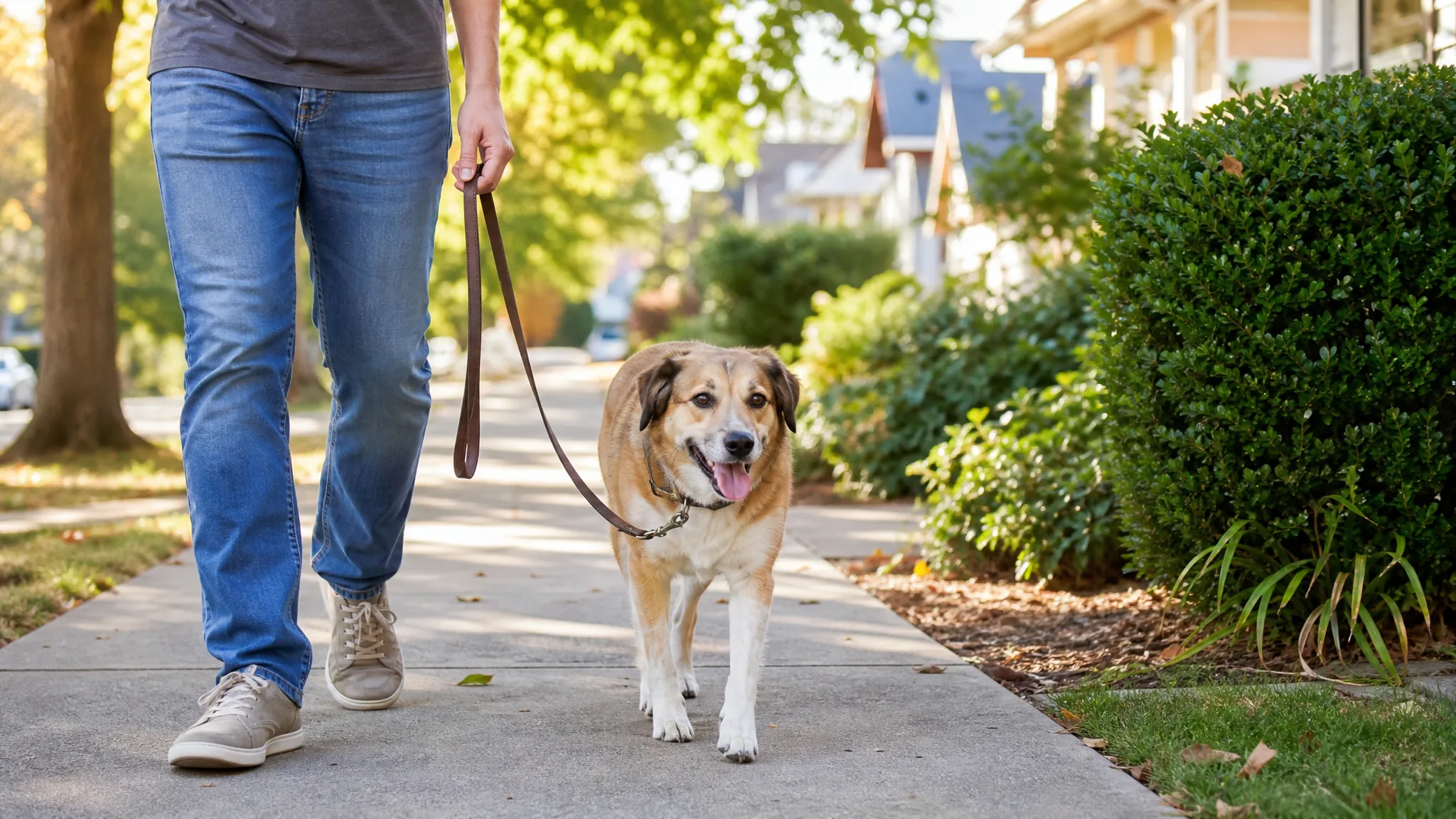
Loose leash walking does not mean your dog has to march at your side like a show dog. For everyday walks, the goal is simpler: the leash has some slack, your dog can respond to you, and neither of you feels like you are being pulled down the street.
Do not wait until your dog is pulling hard to respond. Watch for the moment right before the leash tightens. Slow down, change direction, or call your dog back toward you. When your dog checks in, walks near you, or lets the leash loosen, reward that. A small treat, a calm “yes,” or permission to sniff can all work.
If your dog already has a strong pulling habit, keep training sessions short. Five good minutes of loose leash practice is better than thirty minutes of both of you getting irritated. Build from success.
Related reading: If pulling is the main problem, read Loose Leash Walking: Simple Fixes for Dogs That Pull next.
Step 5: Choose Routes That Fit Your Dog
Some routes are simply too much. Busy sidewalks, barking fence dogs, tight corners, off-leash dogs, scooters, construction noise, and heavy traffic can make a walk harder than it needs to be.
If your dog struggles, choose an easier route. That is not giving up. It is good planning. A calmer route gives your dog a chance to practice the behavior you want instead of rehearsing the behavior you are trying to reduce.
For reactive or anxious dogs, distance is your friend. Cross the street before your dog explodes. Turn around before they lock onto another dog. Use parked cars, hedges, or driveways to create space. You can work on harder environments later. Start where your dog can still think.
If your dog reacts strongly to people, dogs, bikes, or traffic, keep distance on your side. Choose quieter routes, turn around early, and get help from a qualified trainer if your dog cannot recover once they are upset.
Step 6: Match the Walk to Your Dog’s Age and Health
A puppy, adult dog, and senior dog should not all have the same walking routine. Puppies need short, positive outings and careful exposure to the world. Adult dogs often need a mix of exercise and enrichment. Senior dogs may need slower walks, softer surfaces, and more recovery time.
Breed and health matter too. A young herding dog may need more mental work than a casual stroll provides. A short-nosed breed may struggle in heat. A dog with arthritis may want to go farther than their body can comfortably handle.
If your dog has health problems, pain, breathing issues, mobility changes, or sudden exercise intolerance, ask your veterinarian before changing the routine. Walking advice should never replace medical care.
Related readings: How Much Exercise Does Your Dog Really Need? and Puppy Walking Schedule: How Far and How Often to Walk a Puppy.
Safety note: match the walk to the dog in front of you
Skip the “one perfect walk” idea. Puppies, senior dogs, short-nosed breeds, overweight dogs, and dogs recovering from illness may need shorter walks, slower routes, or more rest. Heat, pavement temperature, ice, and humidity can also change what is safe. If your dog limps, coughs, collapses, refuses to continue, or seems painful, call your veterinarian.
Step 7: Bring the Basics
You do not need a pile of gear for a good walk. You do need the basics.
- A comfortable leash, usually four to six feet for neighborhood walks.
- A well-fitted collar or harness.
- Waste bags.
- A few small treats if you are training.
- Water for longer walks or warm weather.
If your dog pulls, a front-clip harness can help while you train. It is not magic, and it should not replace training, but it can make the walk more manageable. Avoid gear that causes pain or fear. A walk should help your dog learn, not scare them into shutting down.
For new-dog basics, the New Puppy Checklist is a useful companion piece even if your dog is past the puppy stage.
Gear Example: Ruffwear Front Range Dog Harness
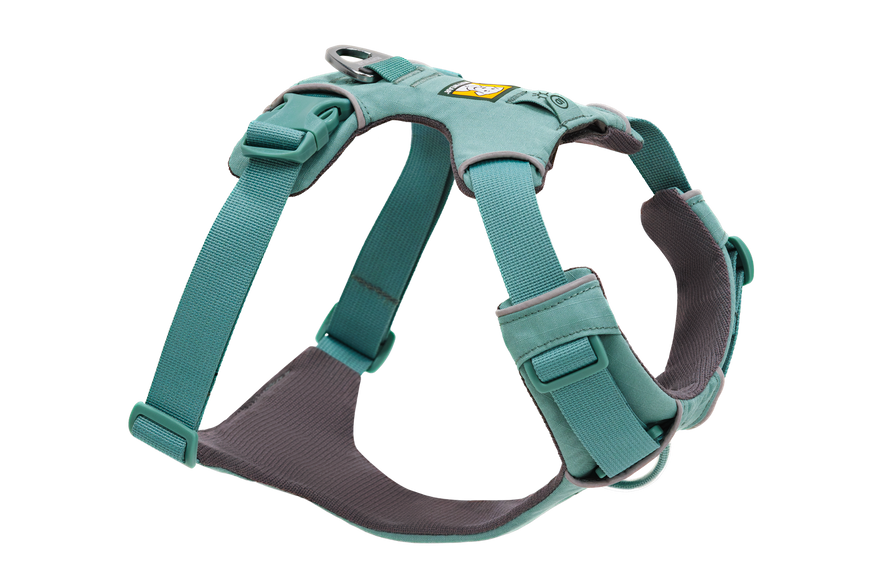
If your dog pulls, a well-fitted front-clip harness can make walks easier while you work on training. The Ruffwear Front Range Dog Harness is a good example of the kind of everyday harness that could fit naturally in this article.
Step 8: Watch Your Dog’s Body Language
Your dog is giving you feedback the whole time. A loose body, soft face, relaxed tail, and occasional check-ins usually mean the walk feels manageable. A stiff body, tucked tail, hard staring, raised hackles, frantic pulling, repeated yawning, or lip licking can mean stress.
When you see stress building, make the walk easier. Add distance. Slow down. Let your dog sniff. Leave the area. There is no prize for forcing your dog through something they cannot handle.
This is one of the biggest differences between a walk that helps and a walk that makes behavior worse. Good walks are not just about control. They are about paying attention.
A Simple Daily Walk Routine
Here is a simple routine you can adjust for your dog:
- Before leaving: leash up calmly and pause at the door.
- First few minutes: give your dog a potty chance and let them settle into the walk.
- Middle of the walk: alternate steady movement with short sniff breaks.
- Training moment: practice one small skill, such as checking in or walking with a loose leash.
- Final minutes: slow down, head home calmly, offer water, and check paws if needed.
This routine can take ten minutes or forty. The length matters less than the pattern. Dogs do well when they know what to expect.
Common Dog Walking Mistakes
A few common habits make walks harder than they need to be:
- Rushing out the door when your dog is already overexcited.
- Using every walk as a strict march with no sniffing.
- Waiting until the leash is tight before responding.
- Taking reactive dogs too close to triggers too soon.
- Ignoring heat, pavement temperature, or signs of fatigue.
None of these mean you are a bad owner. They are normal habits, and they are fixable.
Related reading: Dog Walking Mistakes That Make Pulling Worse.
When to Get Extra Help
Some walking problems need more than a blog post. If your dog lunges, bites, panics, redirects onto you, or cannot recover after seeing another dog or person, get help from a qualified trainer or behavior professional. If your dog suddenly slows down, limps, coughs, collapses, or seems painful, call your veterinarian.
Good advice should have limits. Walking is simple on paper, but dogs are living animals with bodies, histories, fears, and preferences. Respect that, and you will make better decisions.
Free download: Better Dog Walk Planner
Use the printable Better Dog Walk Planner to track walks, leash practice, sniff breaks, triggers, and monthly progress without overcomplicating the routine.
Final Takeaway
A better dog walk is built from small choices. Start calmly. Let your dog sniff. Practice one skill at a time. Pick routes your dog can handle. Watch their body language. Bring the basics. End the walk before everyone is frustrated.
Do that consistently, and the daily walk becomes more than a chore. It becomes one of the easiest ways to give your dog a healthier body, a calmer brain, and a better relationship with you.