Bathing an older dog can go wrong before the shampoo bottle is even open. A slick floor, a hose that does not reach, or a wet turn at the shower door can ask more of stiff legs than the bath itself.
The safest setup is the one you finish before your dog steps into the bathing area. Check the footing, water, supplies, and exit route first. Then decide whether a home bath is reasonable that day.
Quick setup: Give all four paws secure footing. Test the water before your dog enters. Put shampoo and towels within reach. Keep the face out of the spray. Plan a short, dry route out.
First, decide whether to bathe at home
A home bath may be manageable when your dog can enter the space, stand with support from the floor, and turn or back out without a risky lift. The bathroom being easy to clean does not make it the right place if the tub wall is too high or the floor is difficult for your dog to cross.
Pause and call your veterinarian if a new mobility change, obvious pain, weakness, collapse, a new skin problem, or another sudden change is the reason bathing has become difficult. A veterinarian should also guide the use of medicated shampoo. The product may have a prescribed contact time and rinsing instructions that should not be shortened or improvised.
If your dog cannot remain comfortably standing, panics in the bathing space, or must be lifted in a way you cannot control, ask your veterinarian or a groomer about a lower-stress option. A partial clean, professional help, or a different location may be safer than forcing the usual routine.
1. Choose the location by entry, stance, and exit
Walk through the job without your dog first.
- Entry: Can your dog step in without jumping or being hauled over a high side?
- Stance: Is there enough level space for a natural, four-paw stance?
- Caregiver position: Can you reach the water controls and your dog without leaning across a slick floor?
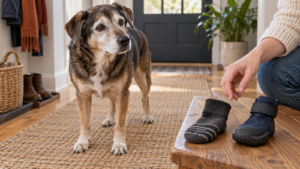
- Exit: Can your dog step onto a dry, stable surface without crossing bare wet tile?
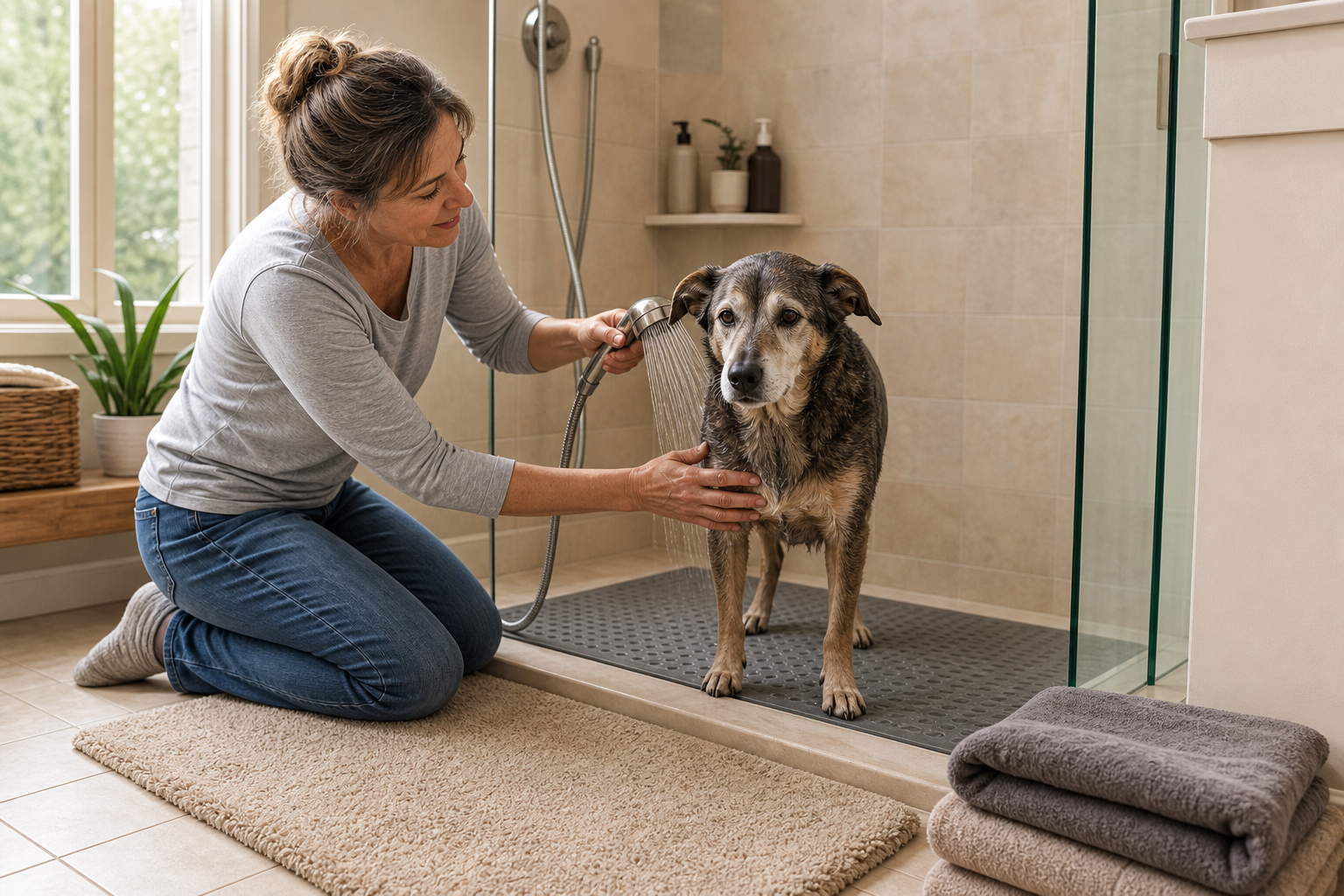
A walk-in shower with a low threshold may be easier for some dogs. A tub may work for a smaller dog only when the lift and landing are controlled. The dog’s size is not the only issue; your balance, grip, and back matter too.
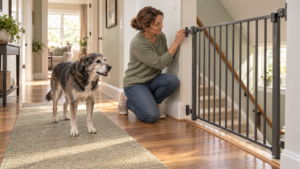
Look beyond the shower door. The route from the bathroom to the first resting spot should be dry and uncluttered. Our senior dog home-safety route guide explains how to check slippery gaps and difficult transitions across the whole path.
2. Match the bath mat to the actual surface
A suction-backed mat is not automatically secure on every tub or shower floor. Read the manufacturer’s surface warning before relying on it.
For example, Gorilla Grip’s current bathtub-mat instructions say its suction cups must be secured before each use and will attach only to a clean, smooth surface. The company says not to use that mat on textured, tiled, non-smooth, newly refinished, or similar surfaces. That is a useful reminder, not a universal product recommendation: a mat that cannot grip your exact floor may create another moving layer under your dog.
Before the bath:
- Clean the floor as the mat maker directs.
- Lay the mat flat and secure every attachment point.
- Press down, then push and pull it with your hand from several directions.
- Make sure it covers the dog’s full standing area, not only the front paws.
- Check that edges do not curl and drainage openings are not blocked.
If the shower floor is textured or tiled, look for a traction solution whose instructions specifically allow that surface. Do not assume a suction-cup design will work because the top feels grippy.
Place a separate absorbent mat outside the bath, but test its backing on the dry floor. The mat should lie flat and begin close enough to the threshold that your dog does not have to plant a wet paw on bare tile.
3. Set the water before your dog enters
Test the water with your hand and keep it lukewarm. Both the ASPCA’s grooming guidance and VCA’s medicated-shampoo instructions call for lukewarm water. VCA also says to rinse medicated shampoo thoroughly and follow the contact time prescribed by the veterinarian.
Choose a water-delivery method your dog already tolerates. The ASPCA lists a spray hose, large plastic pitcher, or unbreakable cup. VCA notes that direct spray can frighten some pets and suggests gently pouring water instead. Those recommendations are not really at odds: use the method you can control without startling your dog.
For a handheld sprayer, check that:
- the hose reaches the dog’s whole body without tugging at the fitting;
- you can control the flow with one hand;
- the hose stays out of the dog’s feet;
- the spray can be aimed at the shoulder and body rather than the face.
If a cup is calmer, choose one that will not shatter if dropped. Keep water out of the eyes, ears, and nose. The ASPCA specifically cautions against spraying or pouring water directly into those areas.
4. Put every supply within one-hand reach
Once your dog is wet, you should not have to leave the room or stretch across the floor. Stage the basics before you begin:
- dog shampoo or the exact medicated product your veterinarian prescribed;
- a cup or connected sprayer;
- two large towels;
- a timer if the shampoo has a required contact time;
- a brush or comb only if your dog’s coat and skin can be brushed comfortably before the bath.
Keep bottles on a stable shelf or counter, not around the dog’s paws. Open caps in advance if that does not risk a spill. Read the label before the bath so you know whether the product must be diluted, how long it stays on, and how thoroughly it must be rinsed.
Use a shampoo made for dogs unless your veterinarian directs otherwise. The ASPCA warns that some human products contain fragrances or other substances that may irritate a pet’s skin.
5. Keep the bath small and predictable
Wet the body gradually. Work in an order you can repeat, and avoid chasing a perfect salon finish at home. For many senior dogs, a short, controlled clean is more useful than a long session that ends with tired legs.
Watch the stance, not just the coat. Stop if the mat shifts, a paw repeatedly slides, your dog can no longer stay comfortably upright, or you lose a stable caregiver position. Do not use a collar or neck tether as a substitute for secure footing.
Rinse every area the shampoo reached. VCA warns against leaving medicated-shampoo residue on the skin. Even with an ordinary dog shampoo, follow the label rather than guessing at dilution or rinse time.
6. Dry before asking your dog to move
Turn off the water and give your dog an initial towel dry while all four paws are still on the secure bath surface. Blot the feet and lower legs before the first step out. Then guide the dog onto the dry exit mat.
Keep towels close enough to reach but out of standing water. Do not leave a stack where the dog must step over it. Once out, move along the prepared dry route to a warm resting area.
What to look for when choosing bath equipment
Inside-bath traction
Prioritize verified surface compatibility, full stance coverage, drainage, flat edges, and cleaning instructions. A brand’s general “non-slip” wording matters less than whether its attachment method works on your exact floor.
Water control
Choose between a gentle sprayer and an unbreakable cup by your dog’s tolerance and your ability to control the water. Reach and hose management are more important than extra spray patterns.
The exit mat
Check the backing on the dry bathroom floor, the gap at the threshold, and whether the mat remains flat when stepped on from the shower. Washability matters, but stability during the exit comes first.
Professional help
A groomer may be the better equipment choice when the home entry is too high, the dog needs more physical support than one caregiver can safely provide, or bathing causes severe distress. Use our guide to evaluate a dog groomer’s handling and communication.
A five-minute pre-bath check
- Walk the entry and exit route.
- Secure and hand-test both traction surfaces.
- Test lukewarm water and the hose or cup.
- Place shampoo, timer, and towels within reach.
- Decide what would make you stop before the dog enters.
You can find more practical product-selection guidance in the Senior Dog Grooming & Clean Home Products hub. For nail care, which needs a different setup and tolerance check, see Dog Nail Grinder or Clippers for a Senior Dog?
Research note: This is a setup and selection guide, not a hands-on product test. Product instructions can change, so verify the current label or manufacturer directions for the exact mat, sprayer, and shampoo you use.
Sources
- ASPCA: Dog Grooming Tips, accessed September 1, 2026.
- VCA Animal Hospitals: Get Your Pet Bathing Routine Down, accessed September 1, 2026.
- VCA Animal Hospitals: How to Bathe Dogs with Medicated Shampoo, accessed September 1, 2026.
- Gorilla Grip: Bathtub Mat specifications and warnings, accessed September 1, 2026.